
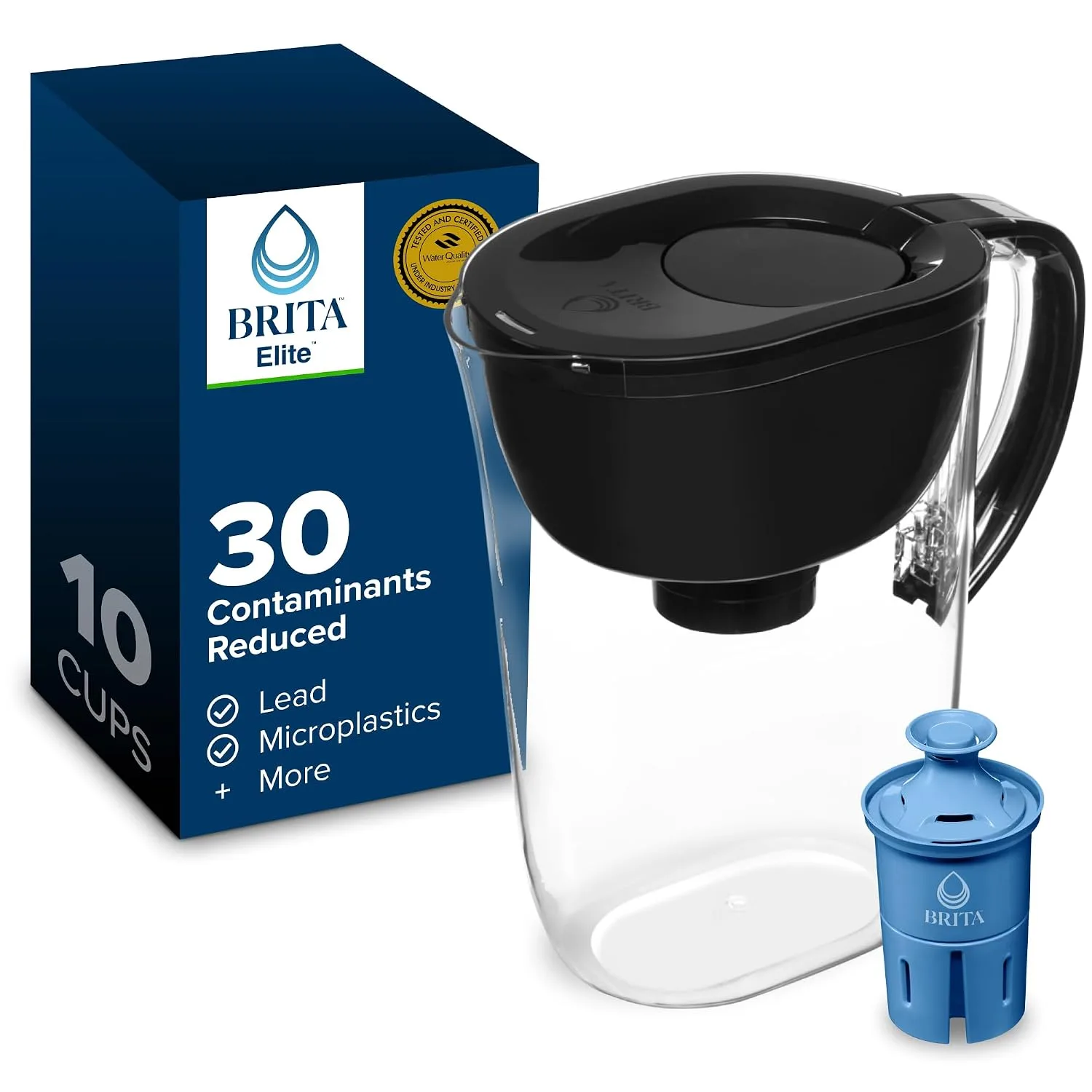
Brita
Everyday Elite Water Filter Pitcher
Trade-offWider body takes fridge shelf space; Elite cartridges cost more than Brita Standard.
Skip it iffridge space is tight or you only need basic chlorine taste reduction on a budget.
Product Reviews · Pitchers — taste, TDS, and broader claims
Five pitchers across carbon, ion-exchange, and high-contaminant composite media — compare them on stated NSF language, cartridge life, and who should skip each one.
Compare side by side
Pick two to four of the shortlist and compare type, installation and the NSF/ANSI claims each maker lists, plus any capacity or annual running cost the listing states.
| Spec | Brita Everyday Elite Water Filter Pitcher | PUR PLUS 7-Cup Pitcher |
|---|---|---|
| Type | Activated carbon | Activated carbon |
| Installation | pitcher | pitcher |
| Capacity | 120 gal | — |
| Annual cost | $40 / yr | $50 / yr |
| Certifications | NSF 42 certifiedNSF 53 certifiedNSF 58 — not statedNSF 401 — not stated | NSF 42 certifiedNSF 53 certifiedNSF 58 — not statedNSF 401 — not stated |
Specs are normalized from manufacturer listings; blanks mean the listing did not state the figure. We do not claim our own independent laboratory results.
Ranked shortlist
Everyday Elite Water Filter Pitcher
Trade-offWider body takes fridge shelf space; Elite cartridges cost more than Brita Standard.
Skip it iffridge space is tight or you only need basic chlorine taste reduction on a budget.
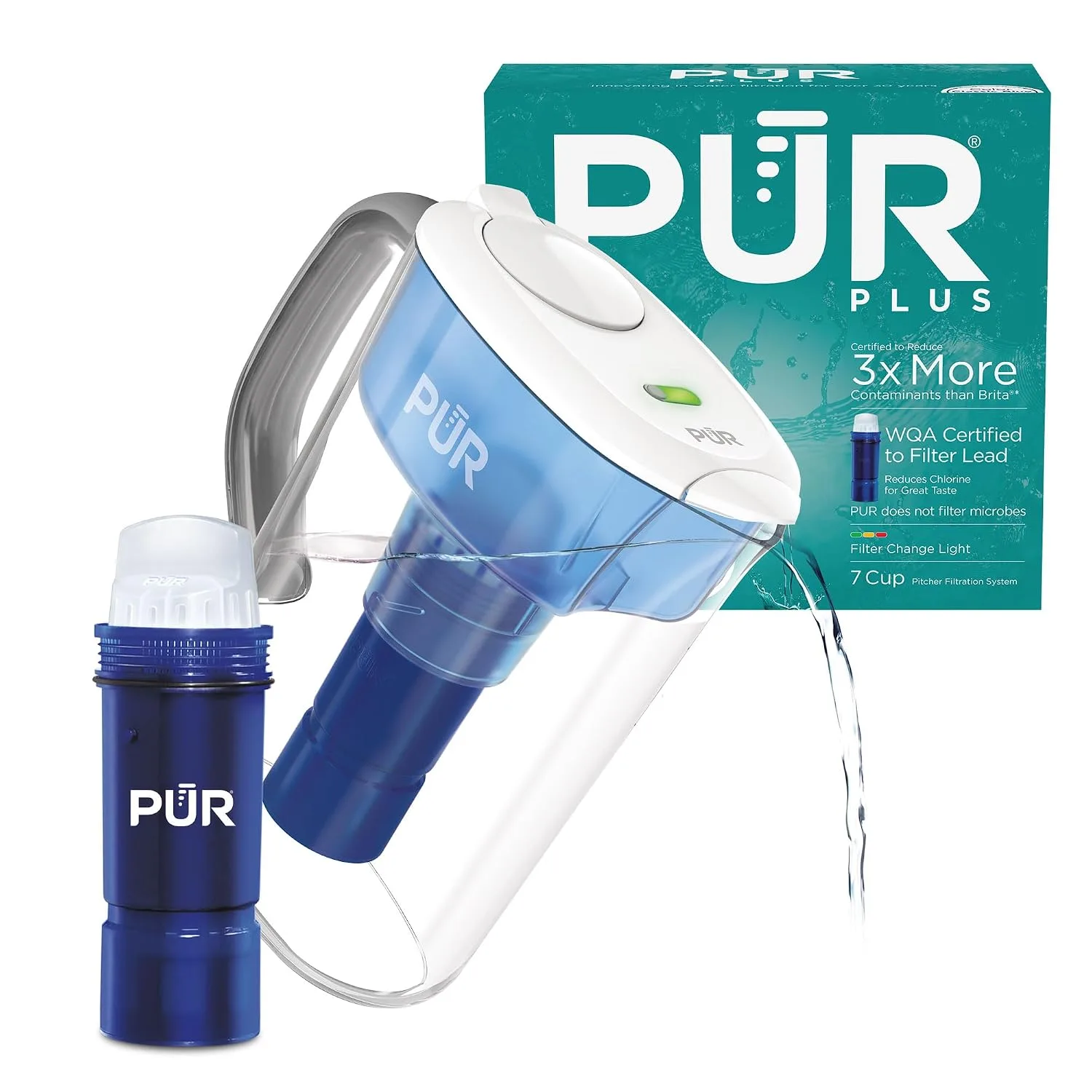
PLUS 7-Cup Pitcher
Trade-offProprietary cartridge family — check that replacements are in stock before committing to a multipack.
Skip it ifyou prefer a cartridge family that third-party makers also supply.
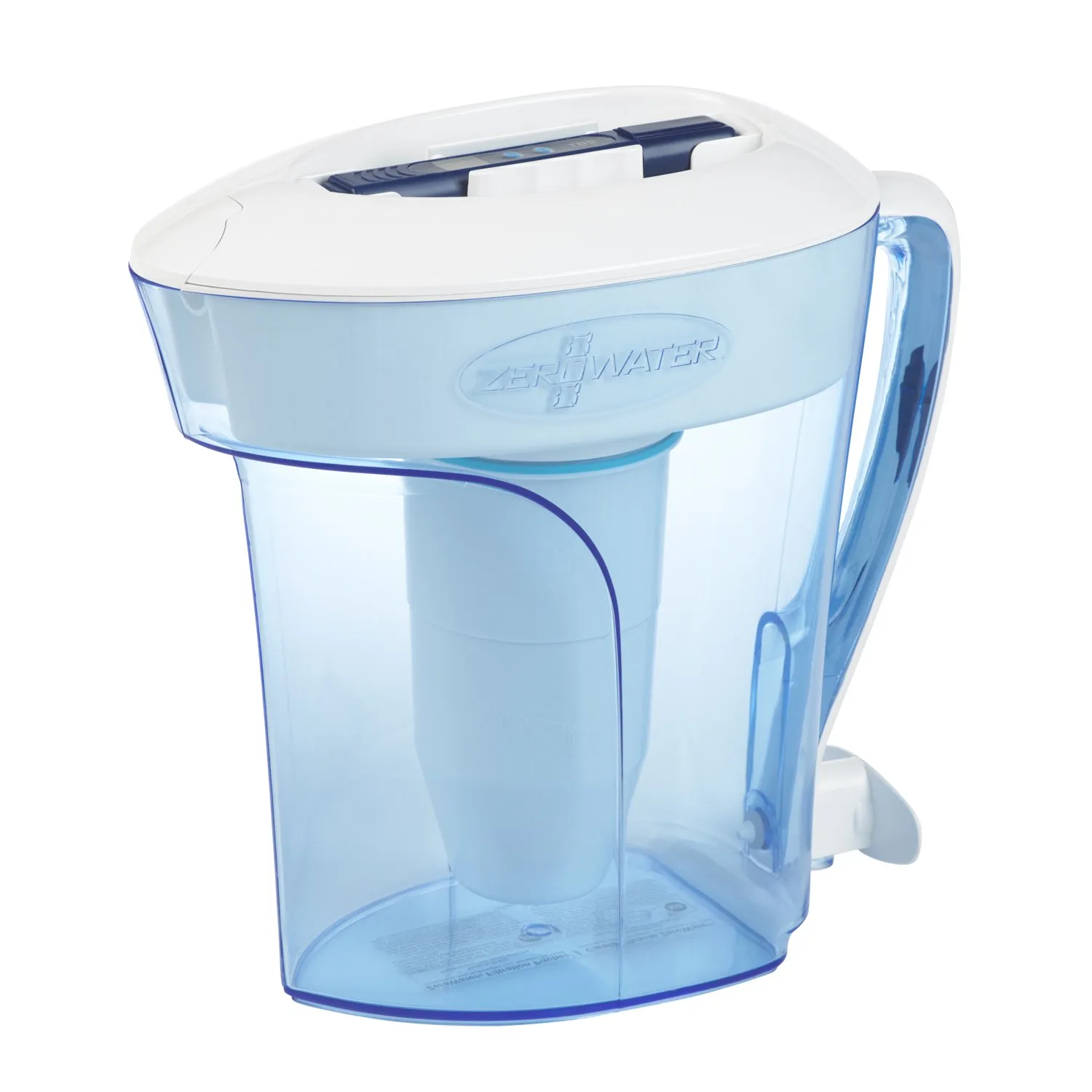
10-Cup Pitcher with TDS Meter
Trade-offIon-exchange media costs more per gallon than carbon and needs replacing on the TDS reading, not the calendar.
Skip it ifyour only concern is chlorine taste and you do not want a TDS-based replacement schedule.
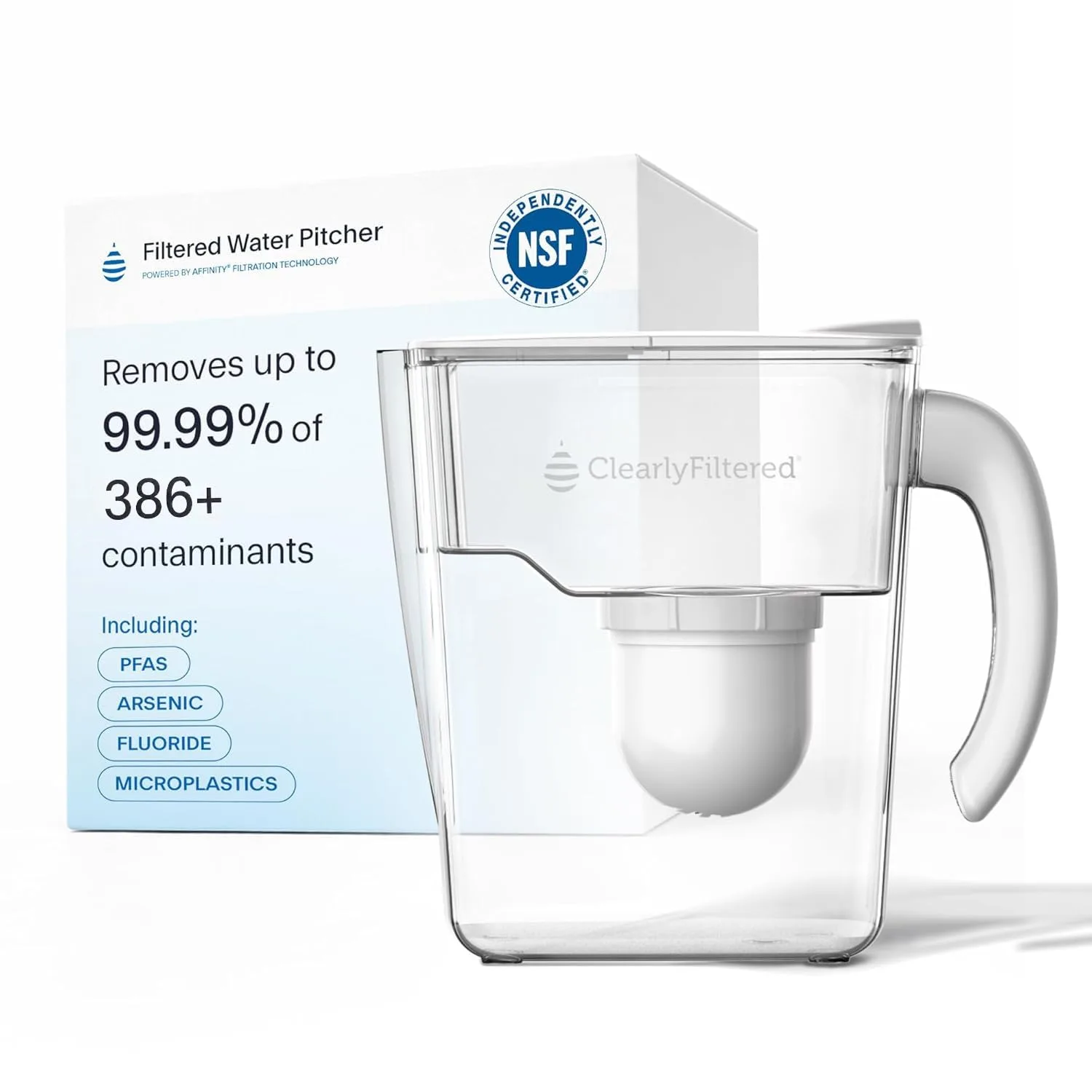
10-Cup Water Filter Pitcher
Trade-offSlow fill and expensive cartridges; priming the filter is fiddly on first install.
Skip it ifyou want the cheapest annual cartridge cost or hate waiting on a slow pour.
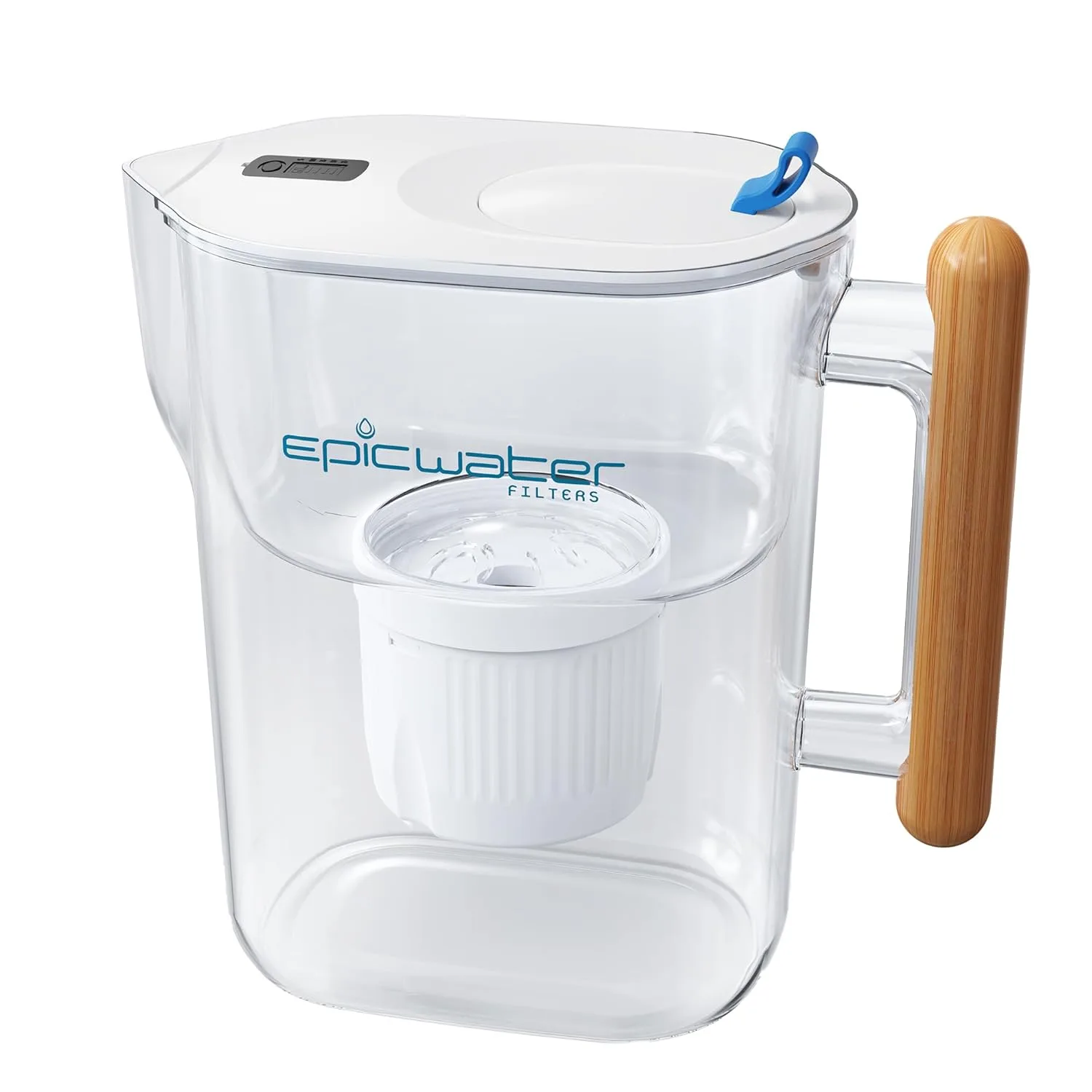
Pure Pitcher
Trade-offPremium price vs Brita/PUR; confirm the exact model listing names the contaminants you care about.
Skip it ifa standard carbon pitcher already matches your water report and budget.
FAQ
Match the exact model in an NSF, WQA, or IAPMO directory. We label standards certified when that match exists; marketing-only language stays claims-only. Check 42 for taste/odor, 53 for health claims such as lead, 58 for RO, and 401 for named emerging compounds.
Follow the manufacturer’s rated interval for the cartridge you buy. Breakthrough usually happens before taste changes, so do not stretch a cartridge past its rating just because the water still tastes fine.
A blank means the manufacturer’s own listing did not state the figure. We publish only what the source states rather than estimating a number — an empty cell is more honest than an invented one.
Methodology
Every row traces to a dated source. We normalize fields and keep blanks honest. We never invent a removal percentage. NSF/ANSI standards are labeled certified when we matched the exact model in a third-party directory; otherwise they stay claims-only.
How these picks were chosen