
Guides · Renters
No-Drill RO Options for Apartments
Countertop RO and portable designs that work without a dedicated faucet hole — with fit checks, who should skip them, and models to inspect.
The constraint, stated plainly
A conventional under-sink RO needs a dedicated faucet hole, a drain saddle, and a cold-line feed. In most rentals those are off the table.
No-drill alternatives are countertop RO units (diverter hose) and manual/portable RO pitchers. Both are real products with real trade-offs.
Who should buy (and who should skip)
Buy countertop RO if you need broad dissolved-solids reduction (including many lead/fluoride/PFAS claims when the listing names them) and you can spare counter space plus an outlet.
Skip it if your only issue is chlorine taste — a pitcher costs far less to run — or if the faucet has no removable aerator and you refuse a manual fill system.
Countertop RO in practice
Expect slower production than a tank under-sink system and a footprint roughly the size of a coffee maker.
Confirm NSF/ANSI 58 (or the health claims you care about) on the exact model, and that replacement cartridges stay in stock.
What to check before ordering
Faucet compatibility, counter depth, outlet proximity, cartridge family price, and whether the listing is certified vs claims-only for your contaminant.
Moving out
Store the original aerator, drain the unit, and keep the manual with cartridge model numbers.
Models to inspect
Catalog shortlist for this decision
Manufacturer specs and listing claims only — WaterVetted does not run its own lab tests. Confirm certifications on the live listing.
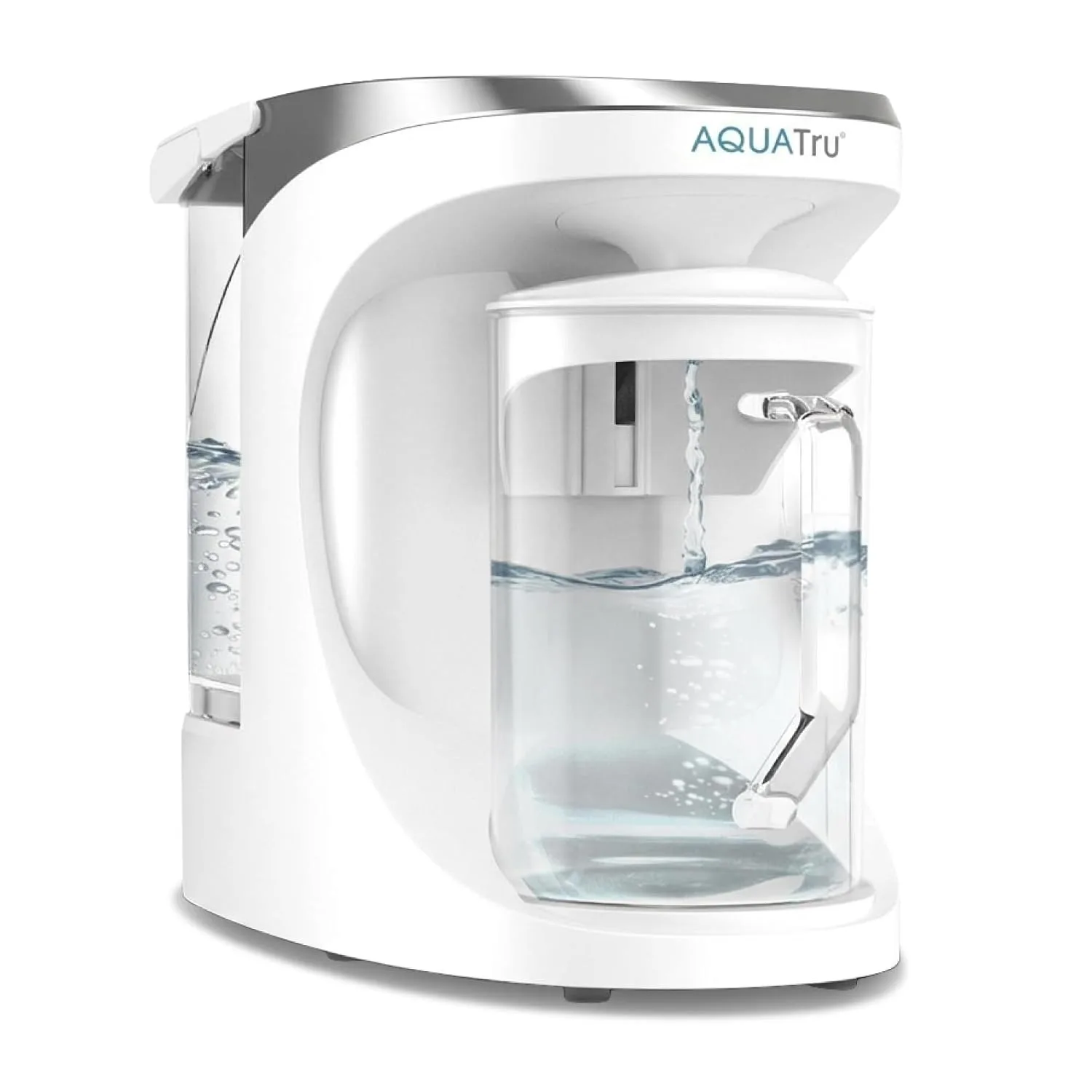
aquatru-glass-carafe
Specs & notes →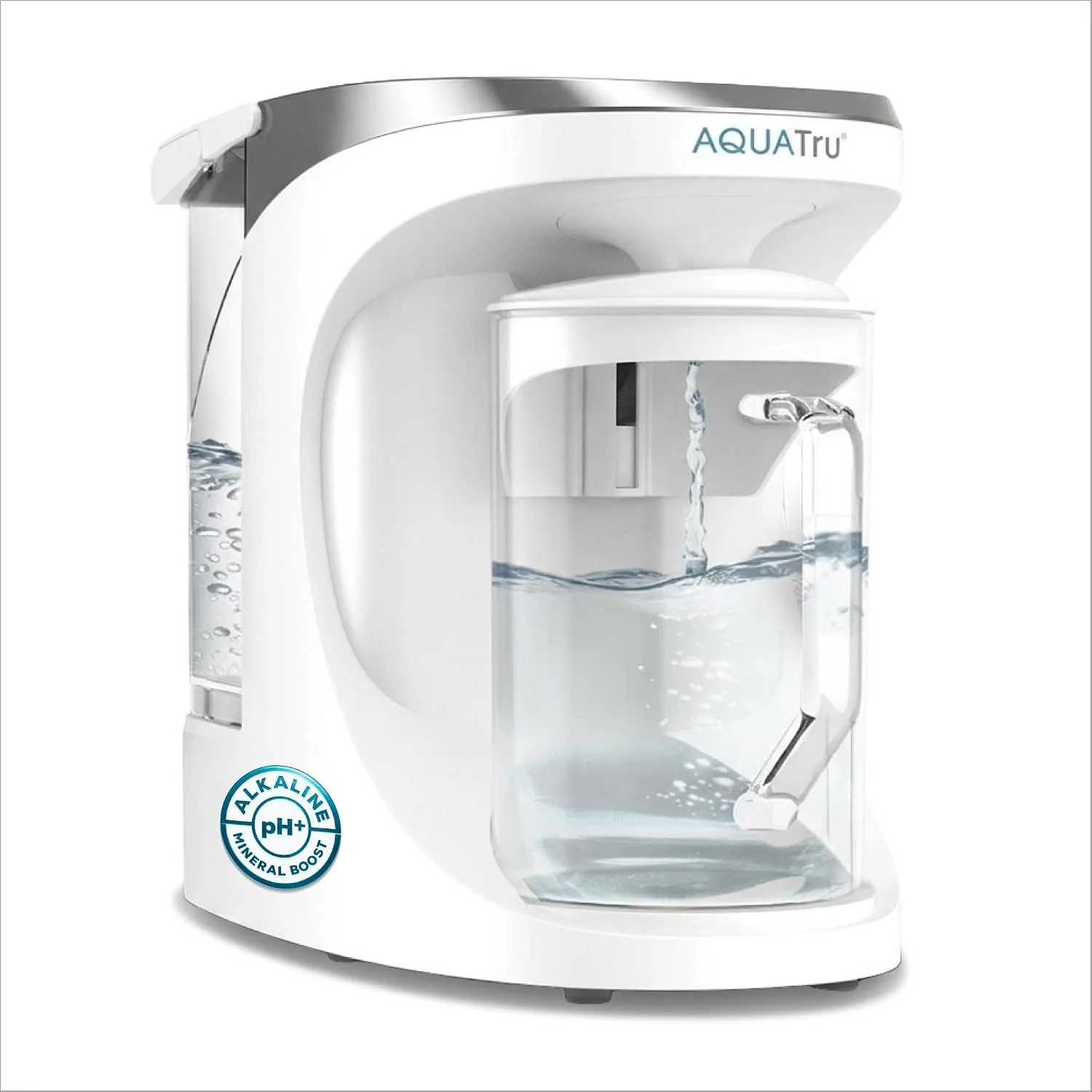
aquatru-glass-carafe-alkaline-countertop
Specs & notes →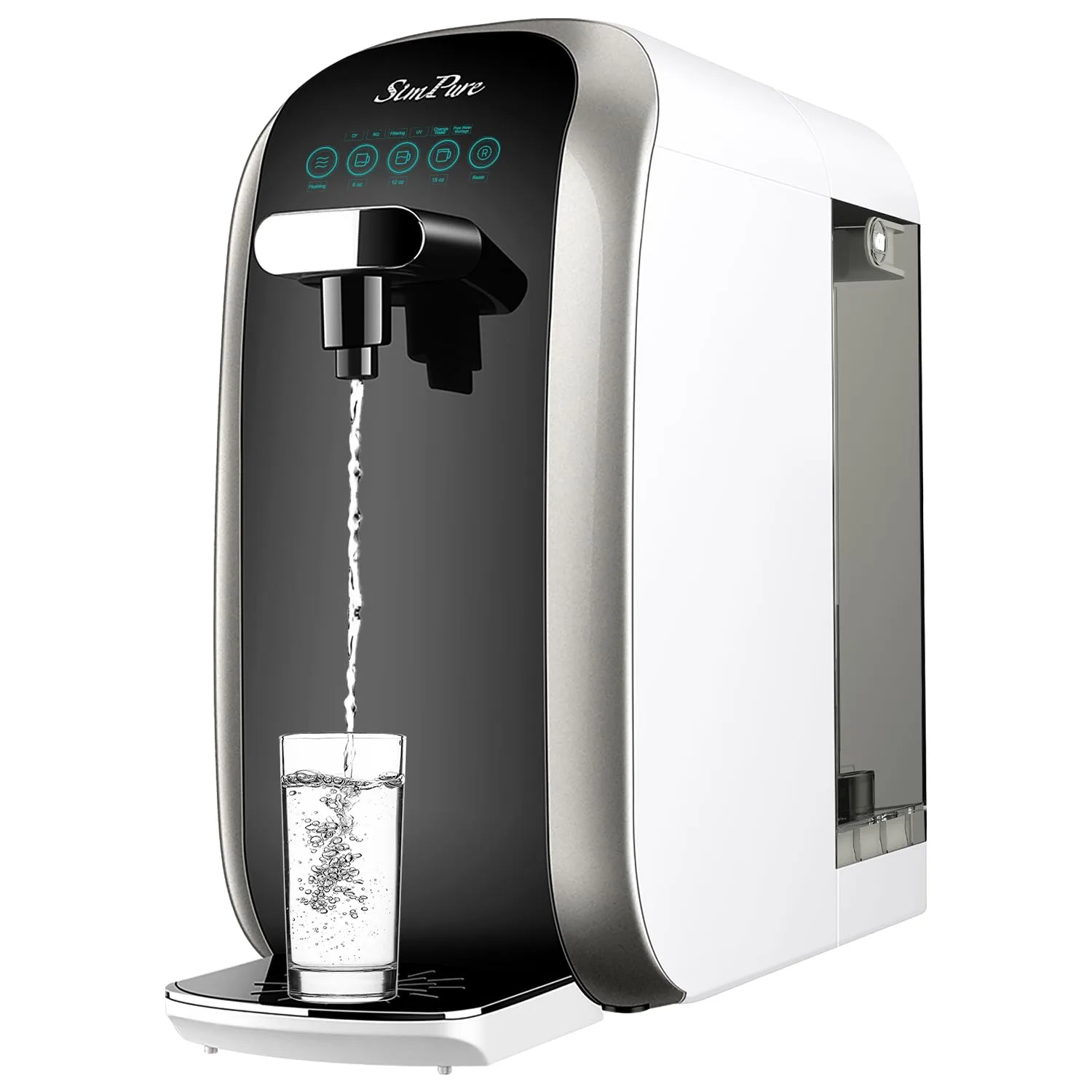
simpure-y7p-bw-uv-countertop-reverse-osmosis-wat
Specs & notes →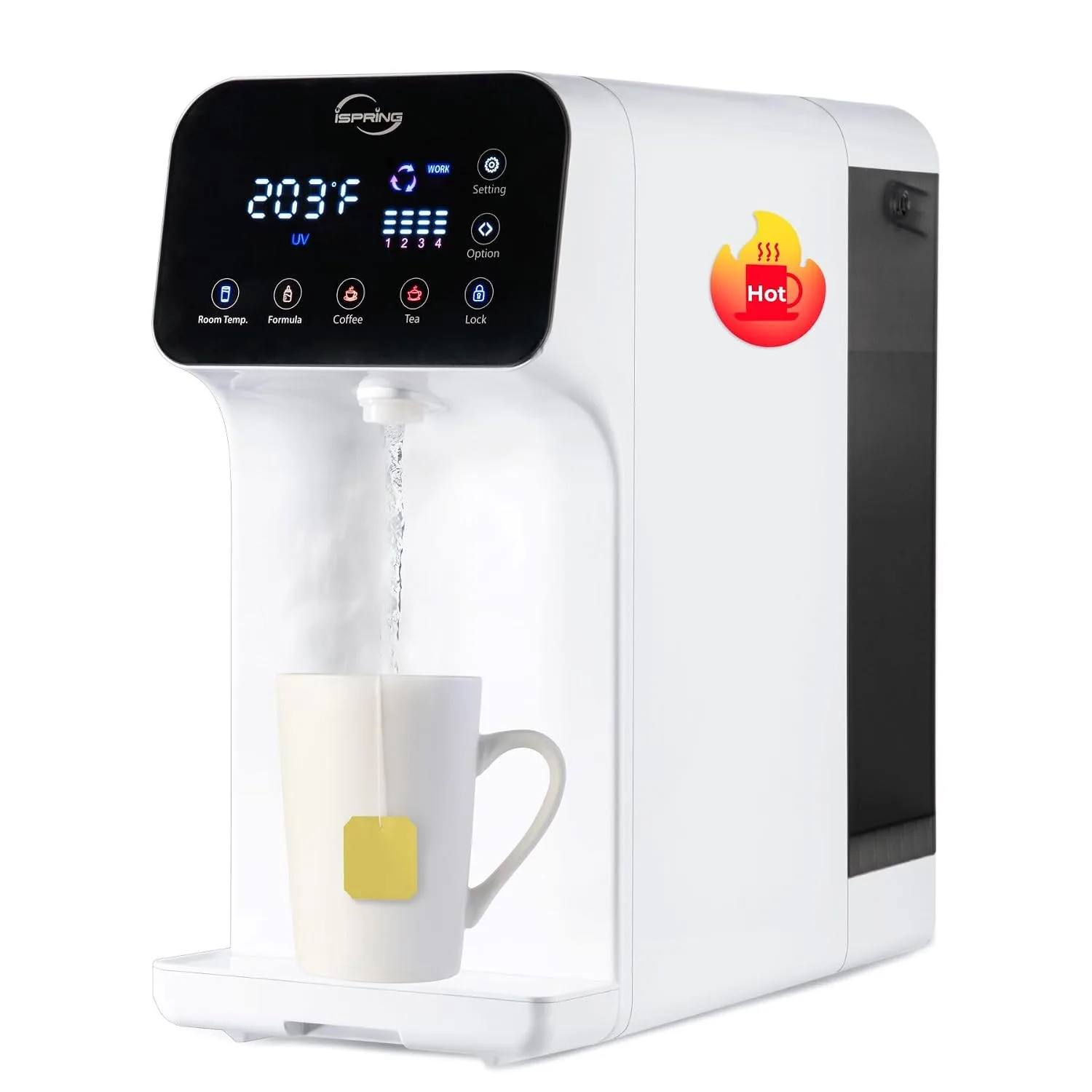
ispring-rcd100-5-stage-countertop-reverse-osmosi
Specs & notes →
FAQ
Quick answers
+Can any RO system be installed without drilling?
Countertop units can, because they feed from the faucet and discharge to the sink. Standard under-sink RO systems generally cannot.
+Is countertop RO as good as under-sink RO?
The membrane chemistry is the same. The differences are production speed, storage, and counter footprint rather than water quality.
+Will a landlord allow a countertop RO unit?
It attaches to the faucet and leaves no modification, so it is normally treated like any other countertop appliance. Reinstalling the original aerator when you leave keeps it that way.