
Best Of
Best Budget Reverse Osmosis Systems: Value RO Picks
A budget under-sink RO doesn't have to mean bad water. I ranked six workhorses by upfront price and filter cost, and flagged which cheap picks cut features you might actually miss.
By Hana Ishikawa · Updated 2026-10-21 · WaterVetted does not run its own lab tests
The budget RO question: how little can you spend without regretting it?
If you're shopping for a cheap under-sink reverse osmosis system, the real question isn't which one is cheapest today — it's which one keeps costing you the least over three to five years. Upfront price is only half the math; filter sets and membrane replacements are the other half, and they vary a lot across these six.
This shortlist is for homeowners who want reliable drinking water without paying for smart faucets or 600-gallon-per-day output they'll never use. It is not for whole-house filtration, and it is not a tankless-vs-tank showdown — I cover that separately in our tankless vs tank RO guide. Every price below is the Hub list price, not a sale sticker, and every spec comes from the manufacturer listing.
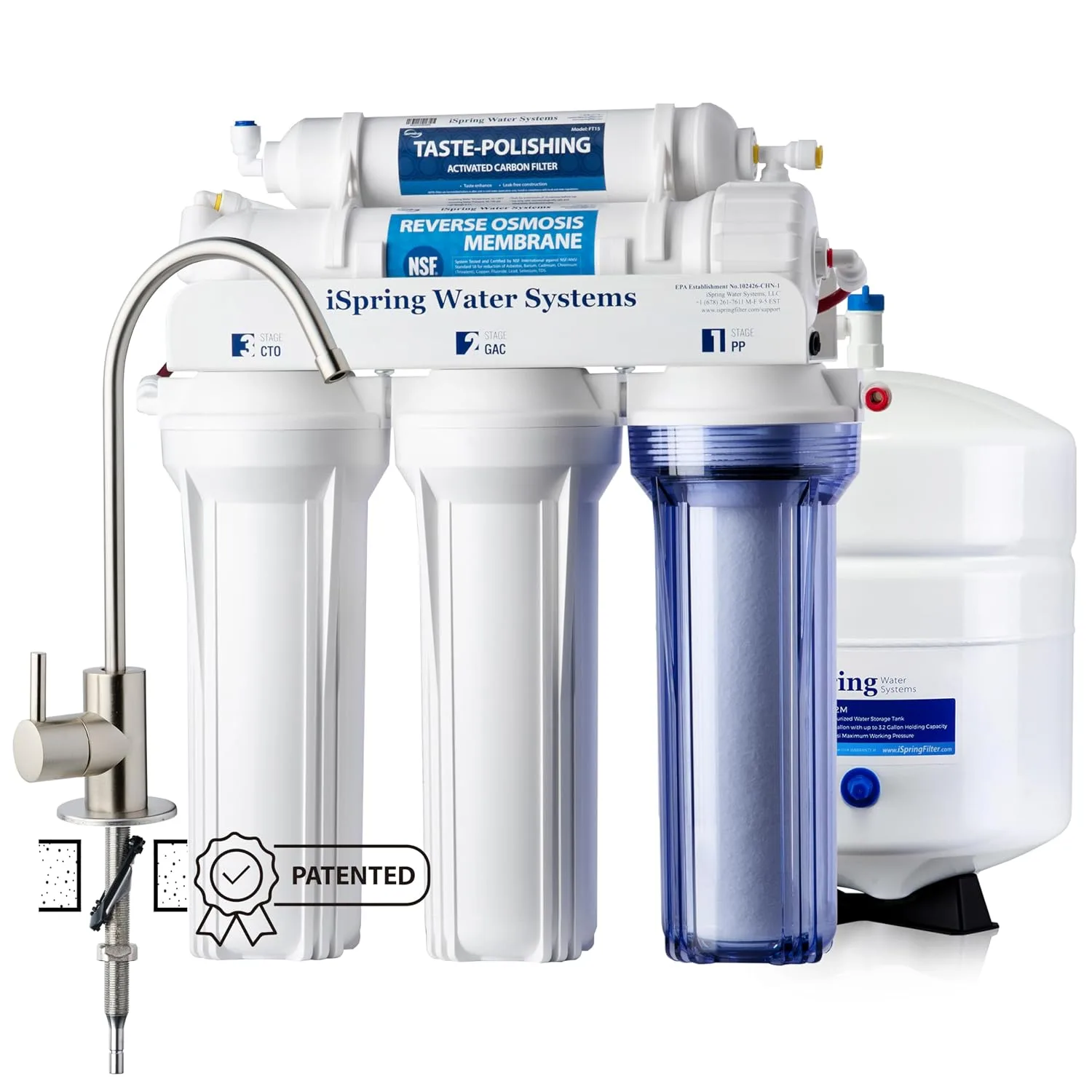
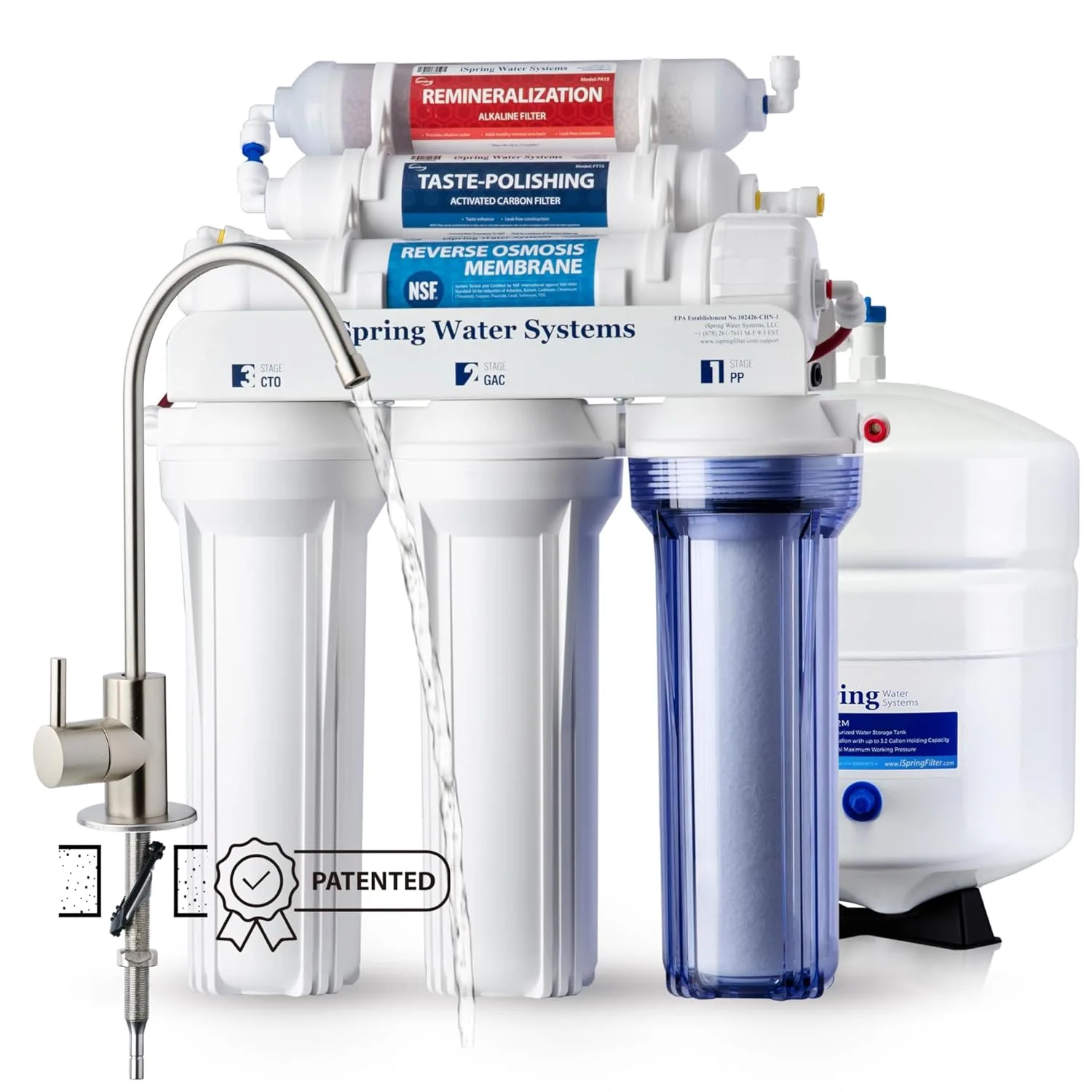
- Best overall value: iSpring RCC7 at $219.99 — 75 GPD, 5-stage, tank design, no outlet needed.
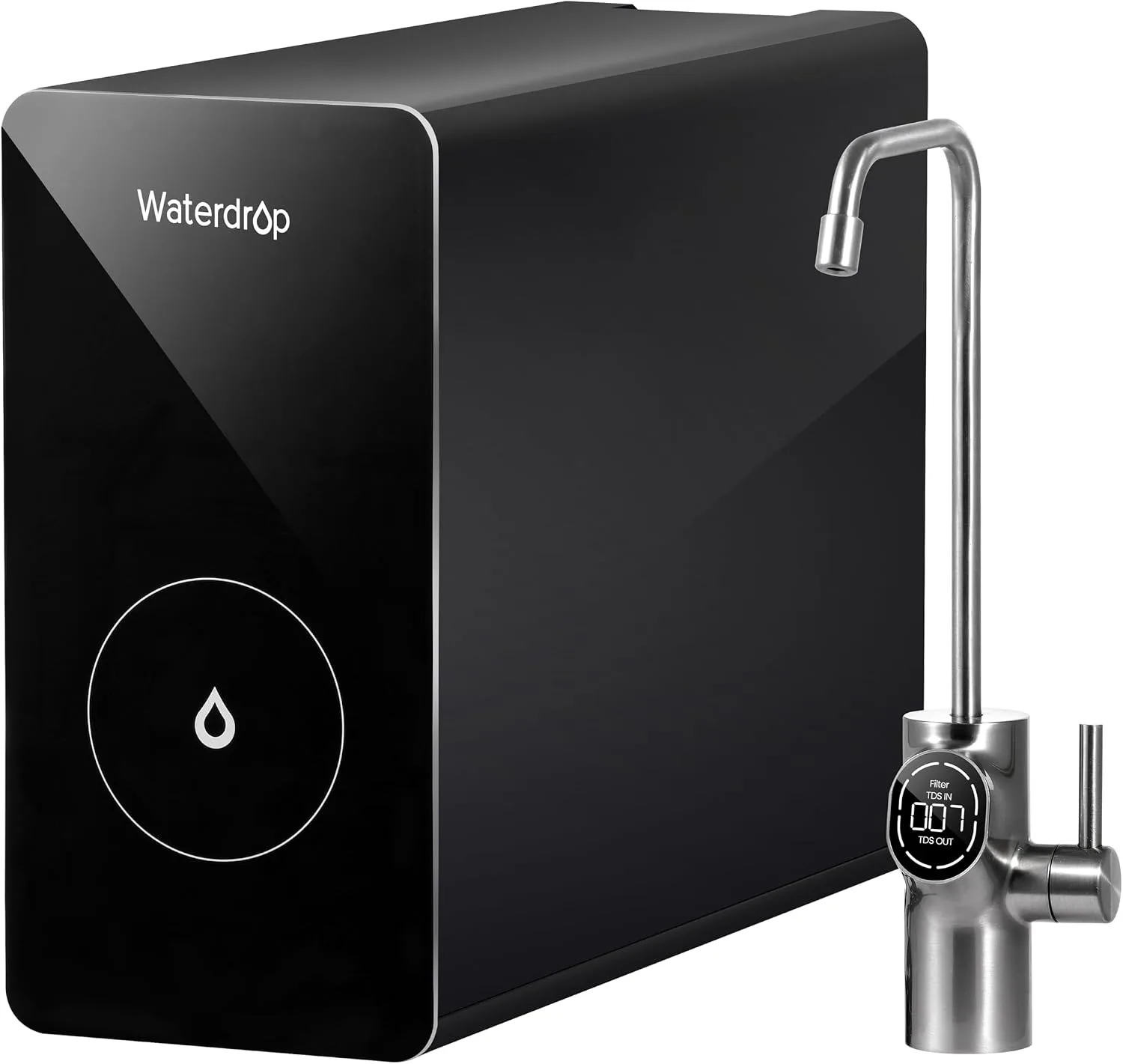
- Best budget tankless: Waterdrop D6 at $379.99 — 600 GPD, 6-stage, smart faucet, but needs power.
- Best for very hard water: APEC RO-90 at $379.99 — 90 GPD and super-capacity filters.
- Best if you want minerals back: iSpring RCC7AK at $379.99 — adds an alkaline stage to the RCC7 platform.
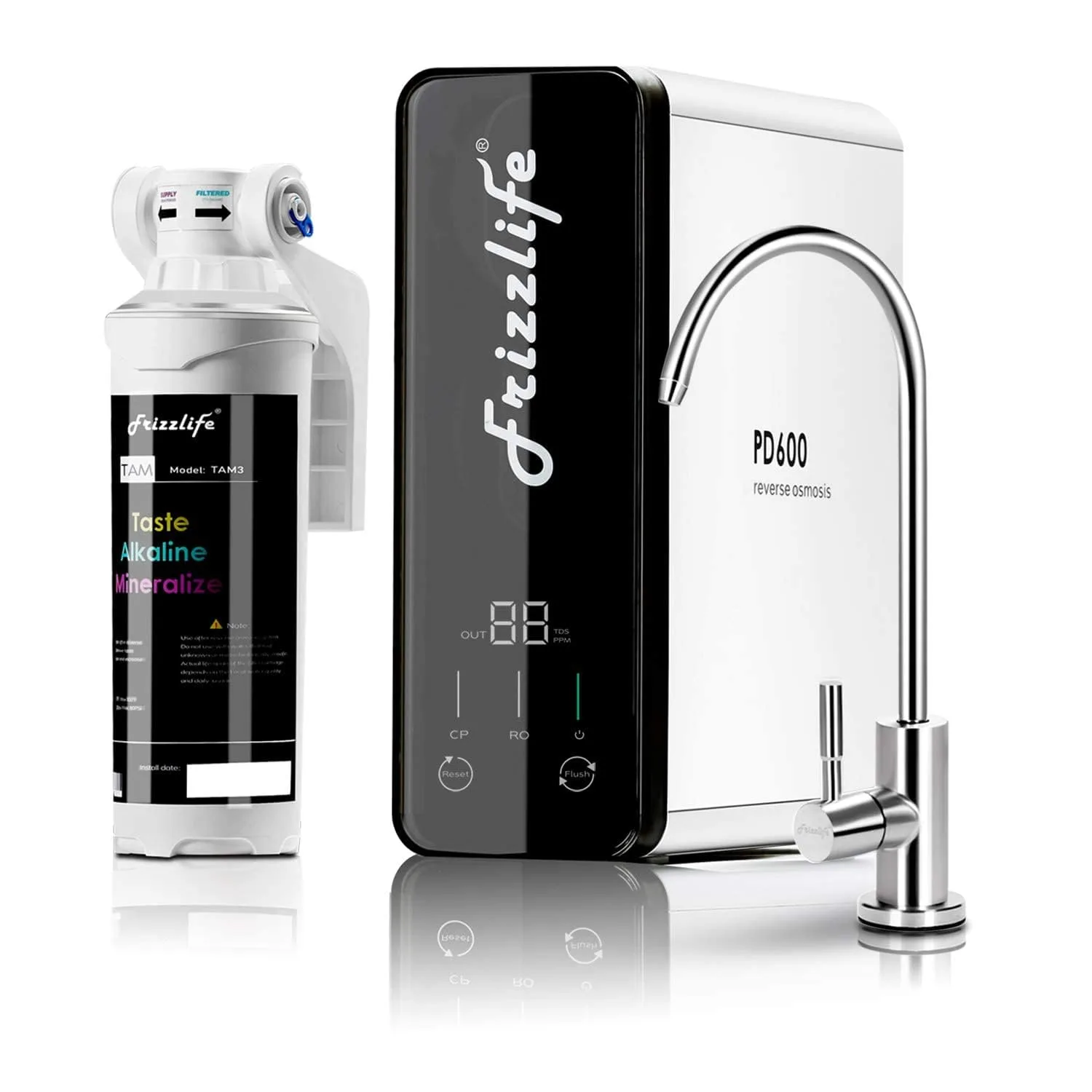
- Skip the Frizzlife if you need a published weight — the listing figure is a data error, so it's n/a here.
How I ranked these (and what I didn't test)
I'm Hana Ishikawa, the under-sink RO editor here. My checklist is built around what actually goes wrong after install: fit under the cabinet, filter cost per year, whether the design needs an outlet, and what long-term owners report about leaks and support. I did not run bench tests or measure rejection rates myself — no lab, no TDS meter in my kitchen. Everything here is from manufacturer listings and paraphrased owner reviews.
The weights: upfront price 30%, filter and membrane cost 25%, installation and footprint 20%, design fit for the space (tank vs tankless, power needs) 15%, and owner themes 10%. Price gets the biggest share because this is a budget page — a $379 system that saves $40 a year in filters still takes years to beat a $219 workhorse. Owner themes are scored, not decorative: recurring leak or support complaints pull a SKU down even if its specs look good.
Why #1 beats #2: the iSpring RCC7 wins on price ($219.99 vs $379.99), needs no outlet, and its 75 GPD tank design is enough for most families. The Waterdrop D6 is faster and smaller, but it costs $160 more upfront, requires power under the sink, and owner reports on filter life are mixed. On a budget page, that gap is hard to justify unless space is the constraint.
frizzlife-reverse-osmosis-water-filter-alkaline
Specs & notes →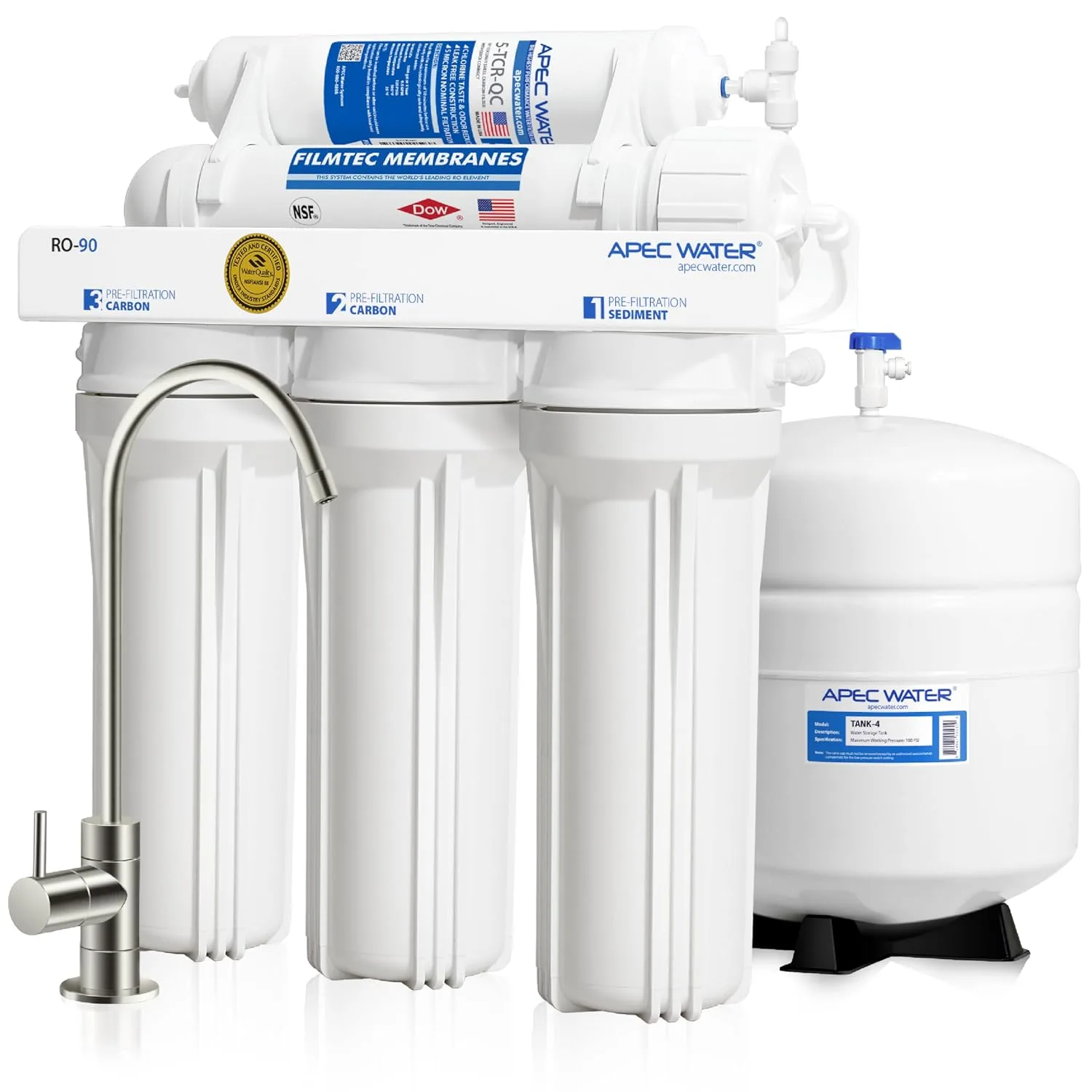
Spec snapshot: all six side by side
Prices are Hub list prices. Ratings are listing aggregates, not proof of owner satisfaction. Frizzlife weight is n/a because the listing weight is a data error; APEC RO-90 design is n/a because the listing doesn't specify tank or tankless.
| Product | Price | Capacity (GPD) | Design | Stages | Weight (lb) | Rating |
|---|---|---|---|---|---|---|
| iSpring RCC7 5-Stage RO | $219.99 | 75 GPD | tank | 5-stage | 27.5 lb | 4.6 |
| Waterdrop D6 Under Sink Reverse Osmosis Water Filter | $379.99 | 600 GPD | tankless | 6-stage | 21.6 lb | 4.3 |
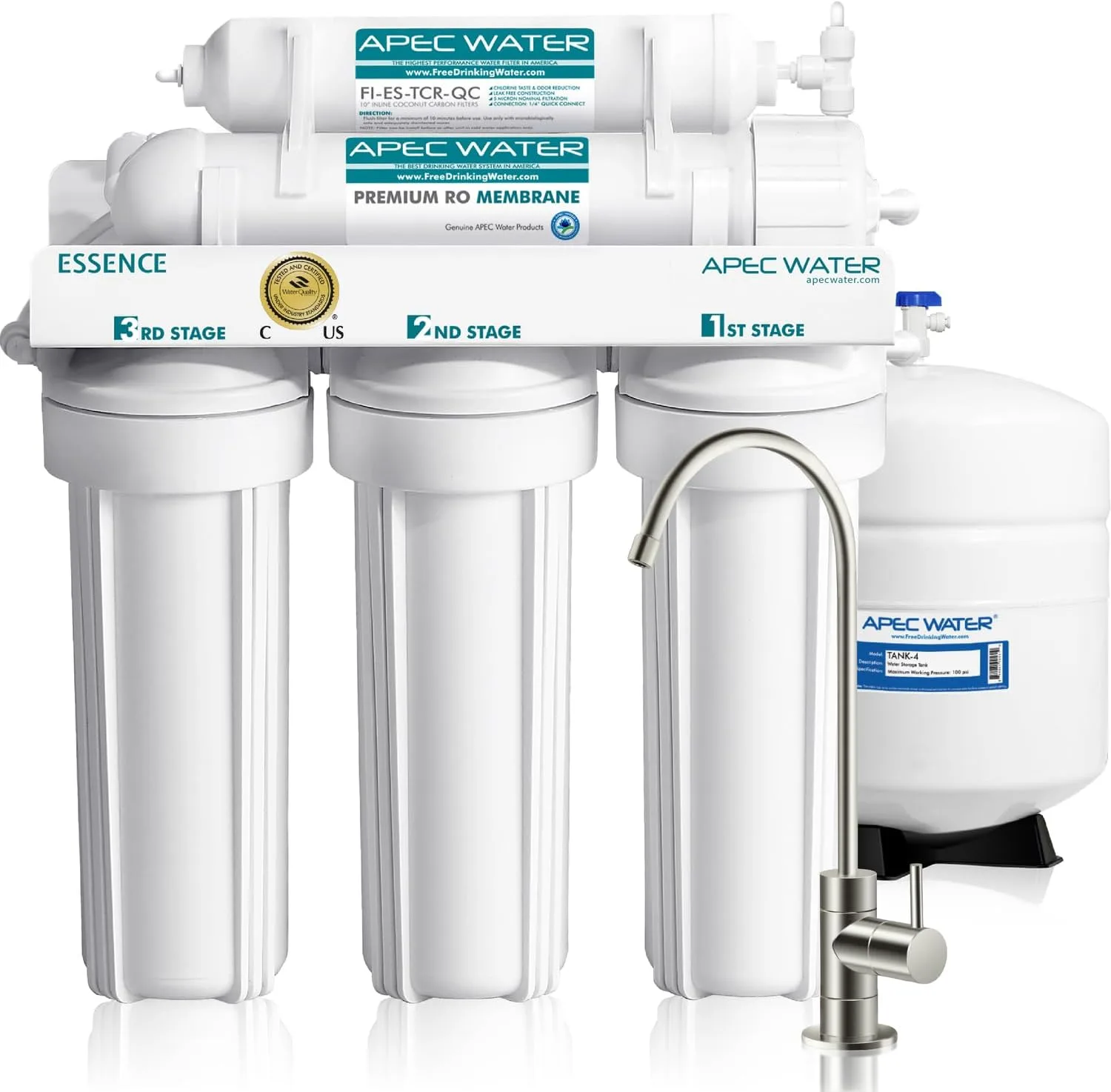
| APEC ROES-50 Essence 5-Stage RO | $379.99 | 50 GPD | tank | 5-stage | 24.9 lb | 4.5 |
| iSpring RCC7AK Alkaline 6-Stage RO | $379.99 | 75 GPD | tank | 6-stage | 27.5 lb | 4.6 |
| FRIZZLIFE Reverse Osmosis Water Filter - Alkaline Mineral pH+ | $379.99 | 600 GPD | tankless | 11-stage | n/a (not on file) | 4.6 |
| APEC RO-90 Ultimate 90 GPD RO | $379.99 | 90 GPD | n/a (not on file) | 5-stage | 25 lb | 4.5 |
The ranking: value picks from cheapest to priciest
I ordered these by what you pay upfront, then adjusted for filter cost and owner themes. The RCC7 stays on top because it's the only one under $250 and still covers the basics well. The rest cluster at $379.99, so the tiebreakers are design fit and what owners actually report.
#1 iSpring RCC7 — the budget workhorse that needs no outlet
The RCC7 is the pick if you want a proven 5-stage tank system and you don't have a power outlet under the sink. At $219.99 it's $160 cheaper than the next tier, and owners consistently describe clean-tasting water with no leaks once the fittings are seated. The listing claims 80–90% TDS reduction; I haven't measured that, so treat it as a manufacturer figure.
In my hands — well, in the paraphrased notes from owners — the install is a commitment, not a quick swap. Measure your cabinet first. The payoff is water that no longer tastes of chlorine, which is why so many buyers describe it as a bottled-water replacement. The transparent first-stage housing makes filter checks easy, and iSpring's US-based support gets repeated praise.
Suits: budget-first buyers with a standard cabinet and no outlet. Skip if: you need 600 GPD for a big family or you want a smart faucet with TDS display.
- Owner theme: installation planning matters — measure before you buy.
- Owner theme: leak-free once seated; support line praised.
- Owner theme: replaces bottled water for daily drinking.
#2 Waterdrop D6 — tankless speed, but you pay for it
The D6 is the budget tankless option, and it's a different animal: 600 GPD, a 6-stage composite filter, a smart faucet that shows real-time TDS, and a 2:1 drain ratio. It saves under-sink space and fills a cup in about 8 seconds. The catch is that it needs an electrical outlet, and at $379.99 it's not really a budget pick — it's the entry point to tankless.
During use, owners report good taste and fast output, but filter life draws mixed feedback. One reviewer with hard Manhattan water saw slower TDS reduction than expected. The listing rating is 4.3, the lowest here, which fits the pattern of convenience traded against long-term cost.
Suits: tight cabinets and buyers who want tankless convenience. Skip if: you have no outlet under the sink or you want the lowest upfront price.
- Owner theme: space saving is the main win.
- Owner theme: filter life reports are mixed.
- Owner theme: install is straightforward when replacing an existing RO.
#3 APEC ROES-50 — the replacement-unit value play
The ROES-50 is a 50 GPD, 5-stage tank system at $379.99. That's a lot for 50 GPD, and it's why it doesn't rank higher on a budget page. But it makes sense in one specific case: replacing an aging system when a full filter and membrane change plus a new tank would cost nearly as much as a fresh unit. Owners describe clean, fresh-tasting water even from hard supplies.
Installation is genuinely DIY-friendly — one first-time installer with no plumbing background got it running. The negative outlier is a report of poorly fitting parts that leaked unless coaxed, so check every connection before pressurizing. Filter cost is low compared with pricier ionizer systems, which is the long-term value argument.
Suits: replacing an old RO and you want a simple tank system. Skip if: you need more than 50 GPD or you want the lowest upfront price.
- Owner theme: good replacement for a 25-year-old system.
- Owner theme: DIY install is manageable for beginners.
- Owner theme: one report of poorly fitting parts.
#4 iSpring RCC7AK — the RCC7 with minerals added back
The RCC7AK is the RCC7 platform plus an alkaline remineralization stage, at $379.99. If you want minerals restored after RO, this is the budget-adjacent way to get it — you're paying $160 over the RCC7 for that sixth stage. The water quality is the immediate standout: clean, fresh, no chlorine taste. Owners who switched from a two-stage carbon filter noticed the difference in dissolved solids, not just flavor.
Same install caveat as the RCC7: measure the cabinet, and expect a commitment. The no-outlet requirement makes it viable in cabinets without power. Support gets the same praise as the RCC7.
Suits: buyers who want alkaline water without a tankless premium. Skip if: you don't care about remineralization — the standard RCC7 covers the basics for less.
- Owner theme: alkaline stage is the differentiator.
- Owner theme: bottled-water replacement.
- Owner theme: install needs planning and space.
#5 Frizzlife Alkaline — tankless with minerals, but check the weight
The Frizzlife is a 600 GPD tankless system with an alkaline mineral stage, listed at $379.99. The listing says 11-stage, which is a lot of filter cartridges to replace — factor that into the long-term cost. The build feels solid, and owners report meaningful reductions in TDS. The mineral filter needs a little time before the taste settles in, so don't judge it on day one.
The standout owner story is customer service: one owner had a four-year-old machine handled at no cost with fast responses. That kind of follow-through is rare. The caveat is weight: the listing weight is a data error, so it's n/a here — don't rely on it for cabinet planning. Measure the unit's footprint from the dimensions instead.
Suits: tankless buyers who want alkaline water and value support. Skip if: you want a published weight or you're sensitive to filter replacement costs.
- Owner theme: solid build, about an hour to install.
- Owner theme: mineral filter needs break-in time.
- Owner theme: exceptional customer service on an old unit.
#6 APEC RO-90 — more output, but not a budget pick
The RO-90 is a 90 GPD, 5-stage tank system at $379.99. It's the highest-output tank model here, and owners describe excellent water with no fishy aftertaste — a contrast to pitcher filters that go off after a week. One buyer on a deep well with arsenic used it as the household's drinking water source, which is a meaningful real-world test.
The listing doesn't specify tank vs tankless, so that cell is n/a. Installation is DIY-friendly, and a detailed first-impressions report measured the filter-to-waste-water ratio close to the claimed figures. The main caveat is that long-term durability reports are still limited relative to older models.
Suits: households that want more output and longer filter intervals. Skip if: you're on a strict budget — the RCC7 does the basics for $160 less.
- Owner theme: high-capacity output for well water.
- Owner theme: DIY install with clear instructions.
- Owner theme: waste ratio tracked close to claims.
Where the jump is worth it — and where it isn't
The one upgrade I'd actually pay for is the RCC7 to RCC7AK jump if you want minerals back. You're staying on the same platform, same install, same no-outlet design, and you get the alkaline stage for $160. That's a clear feature gain, not just a spec bump.
The jump from RCC7 to Waterdrop D6 is harder to justify on a budget page. You're paying $160 for speed and space savings, but you're also adding a power requirement and taking on mixed filter-life reports. If your cabinet is tight, it's worth it. If not, skip it.
The APEC ROES-50 and RO-90 are both $379.99, which puts them in the same tier as the iSpring alkaline and the Frizzlife. The RO-90's 90 GPD is the better value of the two APEC units if you need output; the ROES-50 only makes sense as a replacement unit.
Who should not buy a budget RO
If you rent and can't drill a counter hole for the faucet, skip under-sink RO entirely — a countertop or pitcher filter is the honest answer. If you have very high TDS or hard water, budget a remineralization stage or a softener, because RO alone won't fix scale. And if you want a smart faucet with real-time TDS, none of the sub-$250 options here have one.
Also skip the tankless units if you don't have an outlet under the sink. The D6 and Frizzlife both need power, and running a new circuit is a plumber-and-electrician job, not a DIY afternoon.
FAQ
Do budget RO systems really reduce TDS? The listings claim 80–98% depending on the model, but I haven't measured rejection rates. Treat those as manufacturer figures and test your own water if TDS matters to you.
How often do filters need changing? Most of these use 6-month sediment and carbon stages plus a 1–2 year membrane. Check the specific filter set for your model — the iSpring F4AK/F9K/F19K/F28K75 sets are a good example of the tiered schedule.
Can I install one myself? Owners report DIY success on the tank units, especially the APEC and iSpring. The tankless units are also DIY-friendly but need an outlet. If you're not comfortable with a counter hole and supply-line tap, budget for a plumber.
What's the real drain ratio? The Waterdrop D6 and Frizzlife list 2:1; the tank units don't publish a ratio in the listing. Don't assume a number — check the manual for your model.
What owners actually said
Across the six, the recurring themes are installation planning, leak-free fittings once seated, and support quality. The iSpring units get consistent praise for US-based support and bottled-water replacement. The Waterdrop D6 gets space-saving praise but mixed filter-life reports. The APEC units get DIY-install praise and one outlier leak report on the ROES-50. The Frizzlife gets the strongest customer-service story. These are paraphrased themes from listing reviews, not a controlled survey — and the listing star averages are aggregates, not proof.