
Best Of
Best Under-Sink Reverse Osmosis Systems: Ranked Shortlist
Eight under-sink RO systems, ranked by how they actually install and live under a cabinet. Tank or tankless, 50 to 600 GPD, with the filter schedule you're signing up for.
By Hana Ishikawa · Updated 2026-10-21 · WaterVetted does not run its own lab tests
The buying question: which under-sink RO actually fits your cabinet and your water?
Most people shopping under-sink reverse osmosis are solving one of two problems: their tap water tastes bad or tests high for TDS, or they're tired of hauling bottled water. The system that solves it depends less on stage count than on three things — how much space you have under the sink, whether there's an outlet down there, and how much water your household actually drinks.
This shortlist is not for whole-house filtration, and it's not for renters who can't drill a counter hole for a dedicated faucet. Every system here needs a faucet hole and a feed-water connection; the tankless units also need a nearby outlet. If either is a dealbreaker, a countertop or pitcher filter is the honest answer.
I ranked these on GPD fit, footprint and design, filter upkeep, certifications, and owner themes — not on marketing stage counts. Prices are list prices; sale stickers move around and I don't chase them.
Quick picks: the three that cover most kitchens
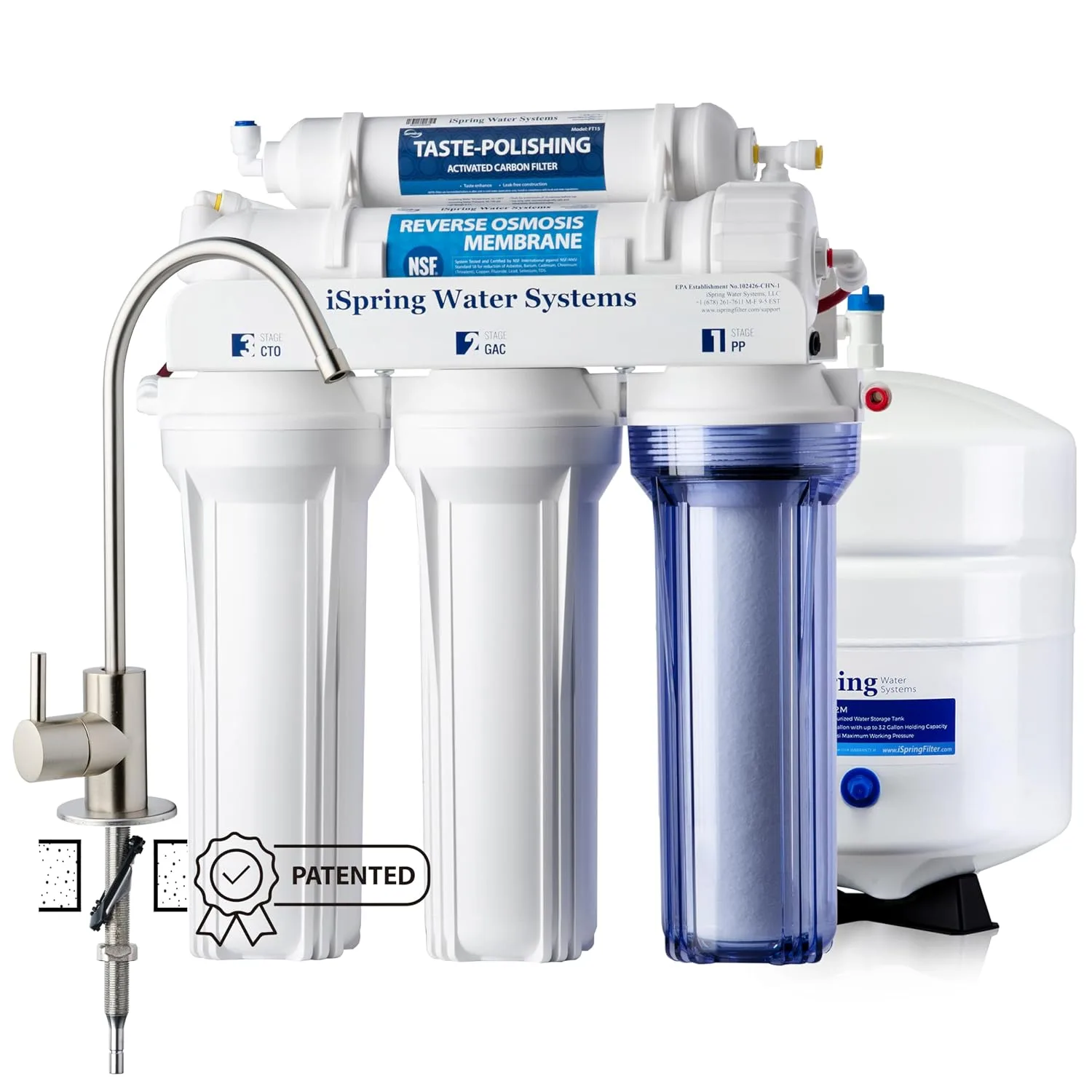
If you want the safest default, the iSpring RCC7 is the one I'd point most people to. It's a 75 GPD tank system, 5-stage, $379.99, and the owner reports are unusually consistent about leak-free installs and US-based support. No outlet needed, which matters more than people expect.
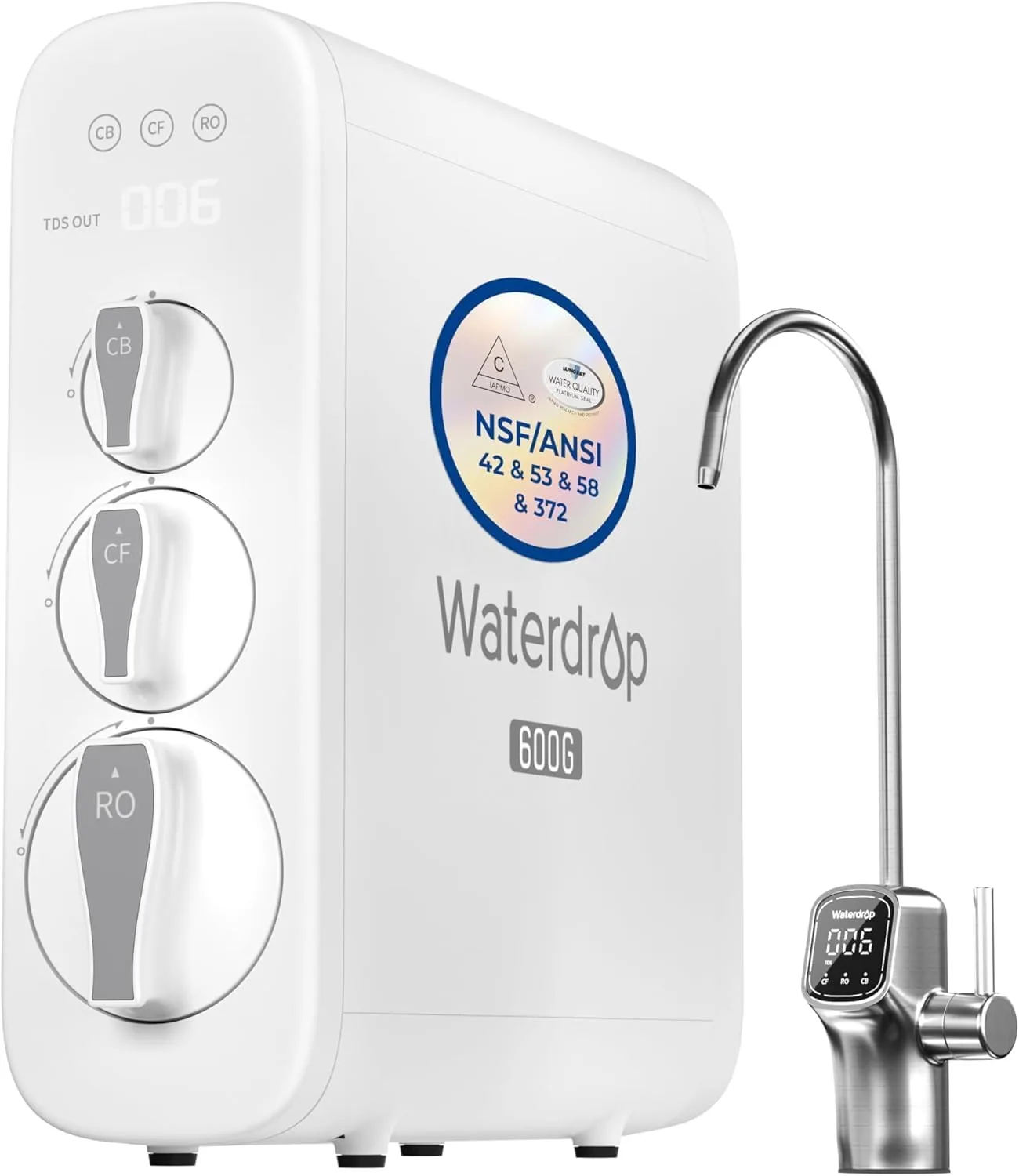
If counter space is tight or you want fast fill without a storage tank, the Waterdrop G3P600 is the tankless pick at $379.99 — 600 GPD, 8-stage, and a smart faucet that shows TDS. It needs electricity under the sink, and owners describe installs running three-plus hours.
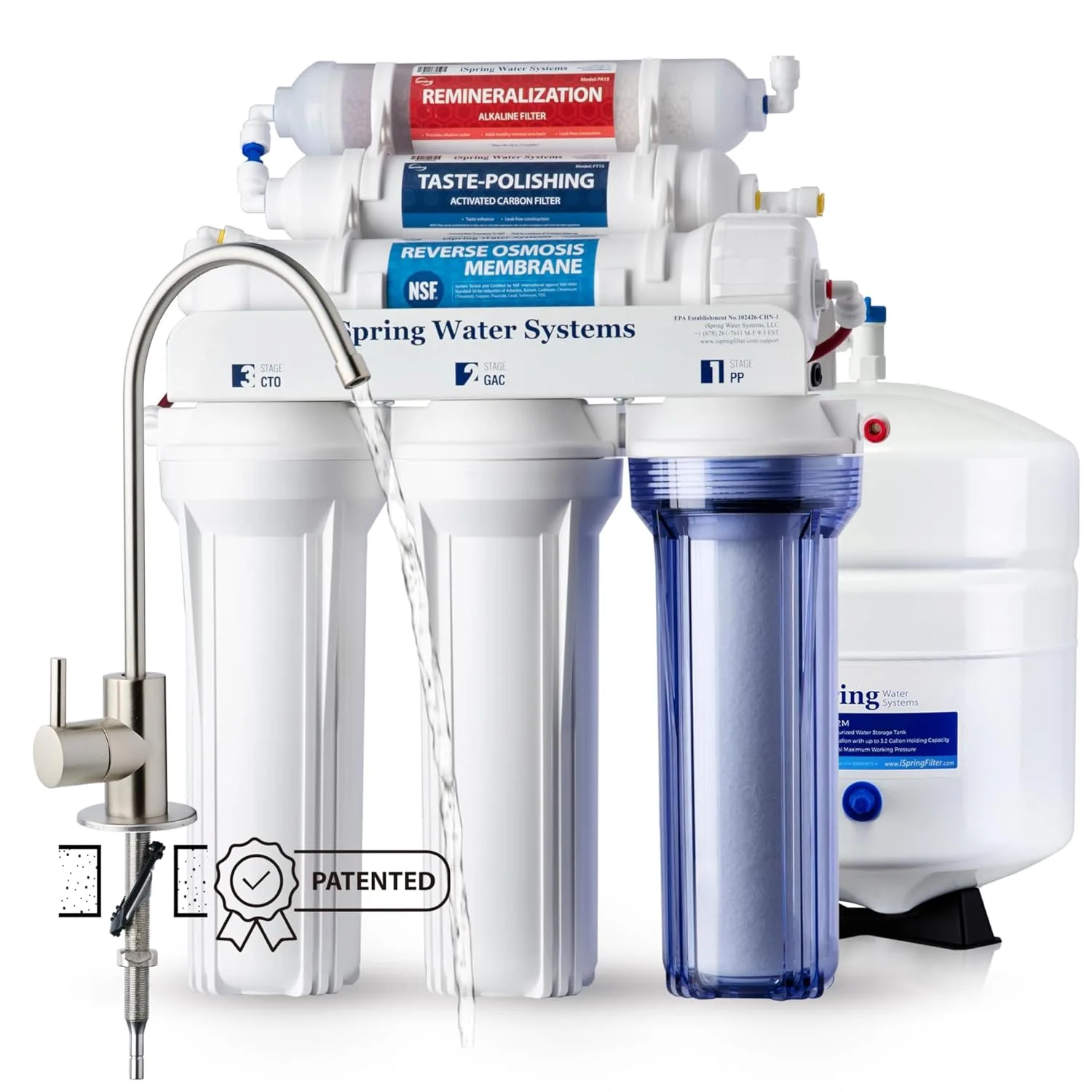
For alkaline-water fans, the iSpring RCC7AK adds a remineralization stage for the same $379.99. Same 75 GPD tank platform, 6-stage, and the same no-outlet advantage. The RCC7AK-UV steps up to 7-stage with a UV lamp for another $379.99 — same price, more stages, slightly heavier at 28.6 lb.
How I ranked these (and what I didn't test)
I'm Hana Ishikawa, the under-sink RO editor here. My background is osmosis stages, TDS rejection, wastewater ratio, remineralization, and the maintenance a homeowner actually has to do. I did not run lab rejection tests for this piece — nobody should claim they did without a bench. What I did was reconcile each listing's published specs against owner reports and flag where they disagree.
The weights: GPD fit and household size 25%, footprint and tank-vs-tankless design 20%, filter cost and change interval 20%, certifications and published rejection claims 20%, owner themes 15%. Every percentage is scored; nothing is listed and then ignored.
Why the RCC7 edges out the G3P600 for #1: on GPD fit, 75 GPD with a tank covers a family of four without an outlet, while the G3P600's 600 GPD is faster but needs power and a longer install. On owner themes, the RCC7's leak-free and support reports are more consistent; the G3P600 has honest noise and TDS-display complaints. The G3P600 wins on footprint and fill speed — that's why it's #2, not #1.
A note on data: the APEC RO-90 listing doesn't state tank vs tankless, so the table says n/a (not on file). I did not guess. Star averages are listing aggregates, not proof of owner experience.
ispring-rcc7ak-uv
Specs & notes →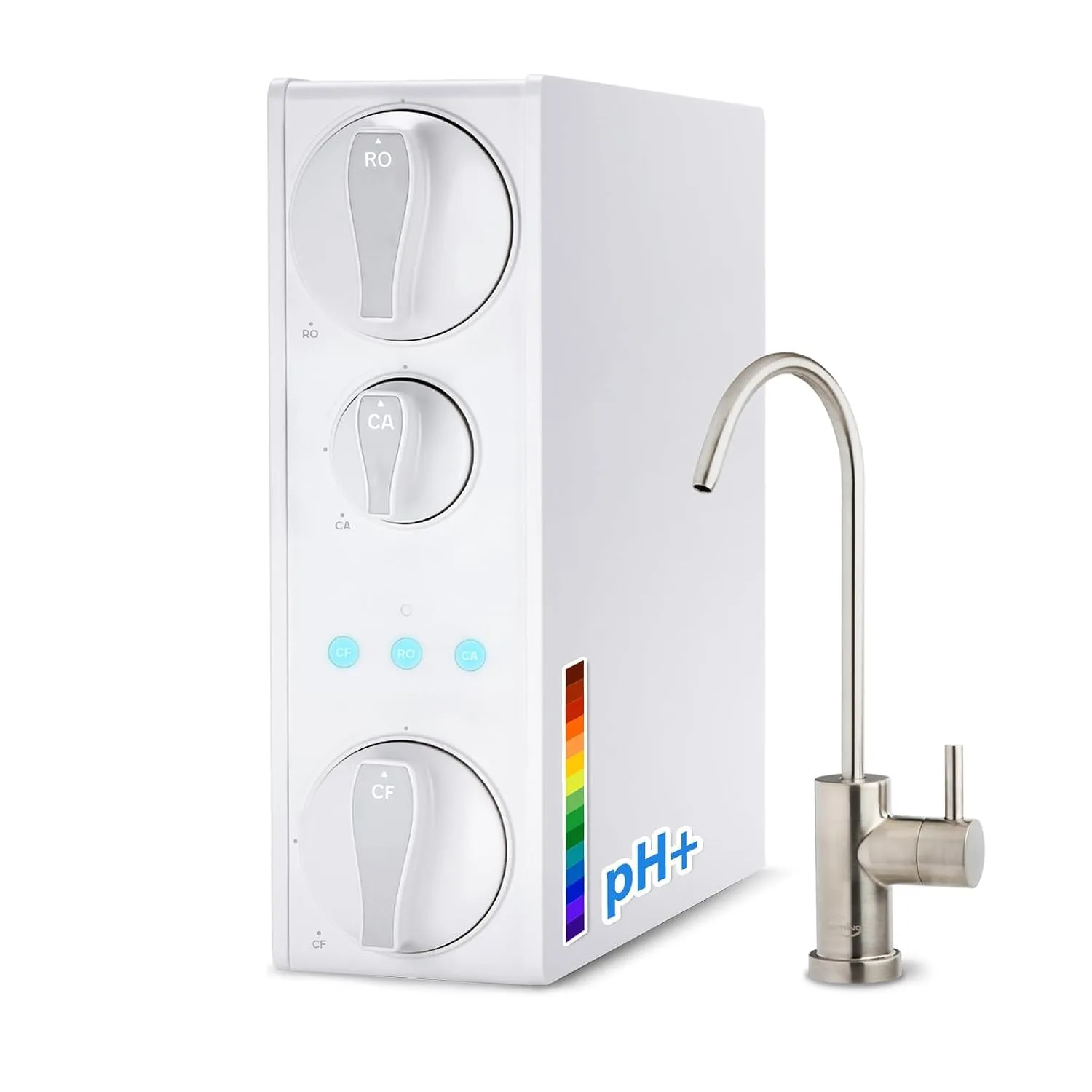
ispring-under-sink-tankless-ro-water-filter
Specs & notes →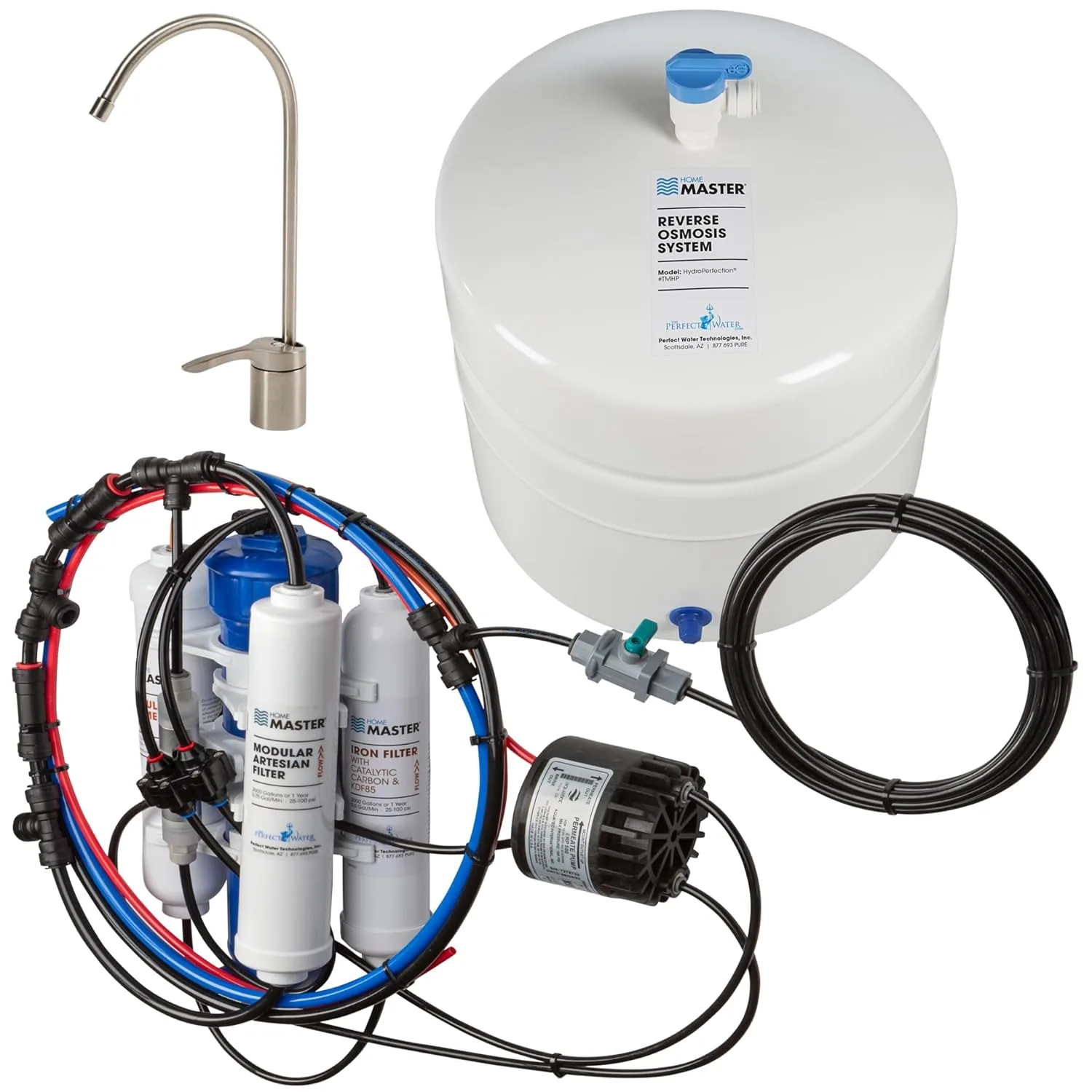
Spec snapshot
All prices are list prices. GPD, design, stages, and weight come from the product data; n/a means the listing didn't publish it.
| Product | Price | Capacity (GPD) | Design | Stages | Weight (lb) | Rating |
|---|---|---|---|---|---|---|
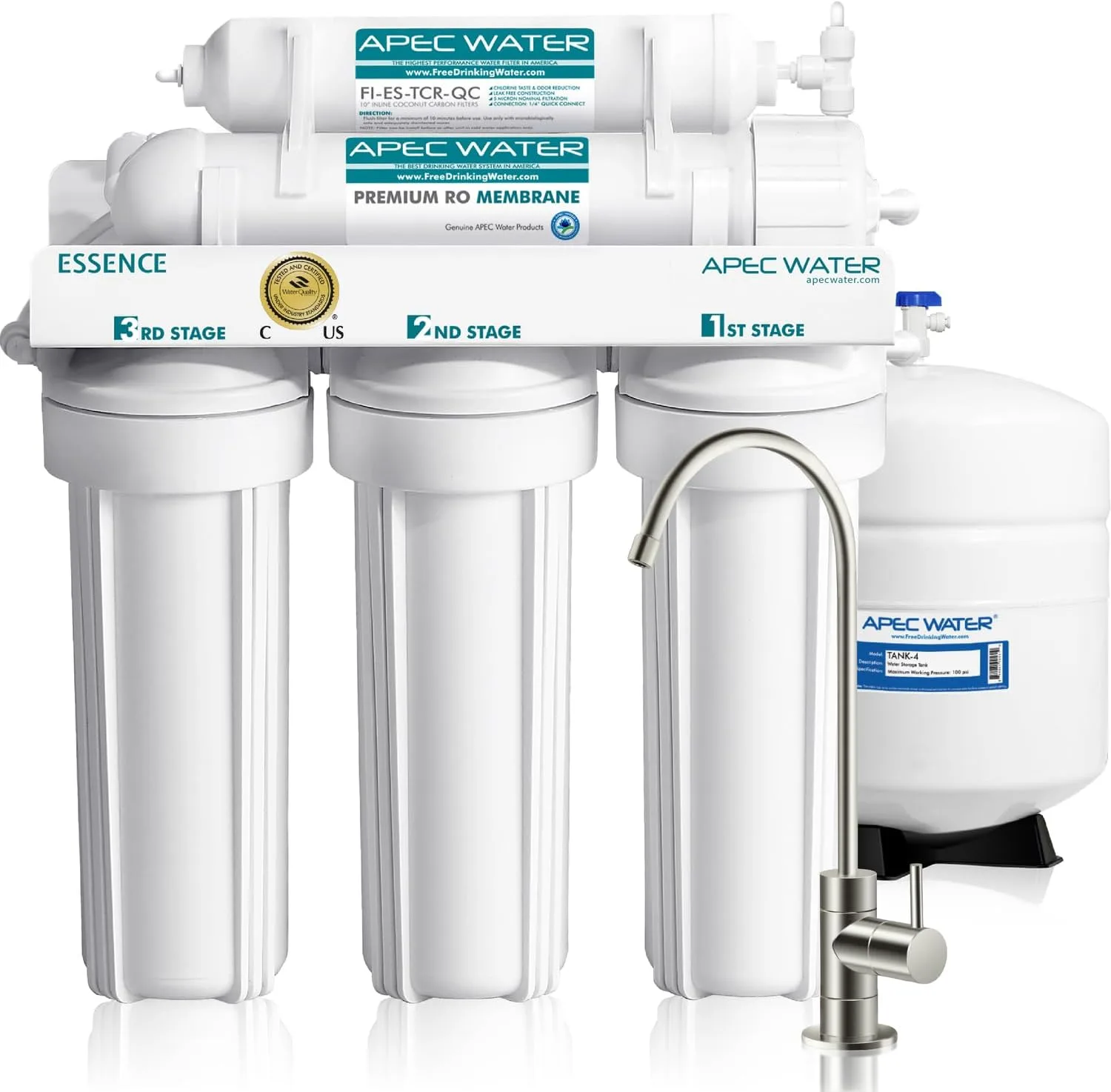
| APEC ROES-50 Essence 5-Stage RO | $379.99 | 50 GPD | tank | 5-stage | 24.9 lb | 4.5 |
| iSpring RCC7 5-Stage RO | $379.99 | 75 GPD | tank | 5-stage | 27.5 lb | 4.6 |
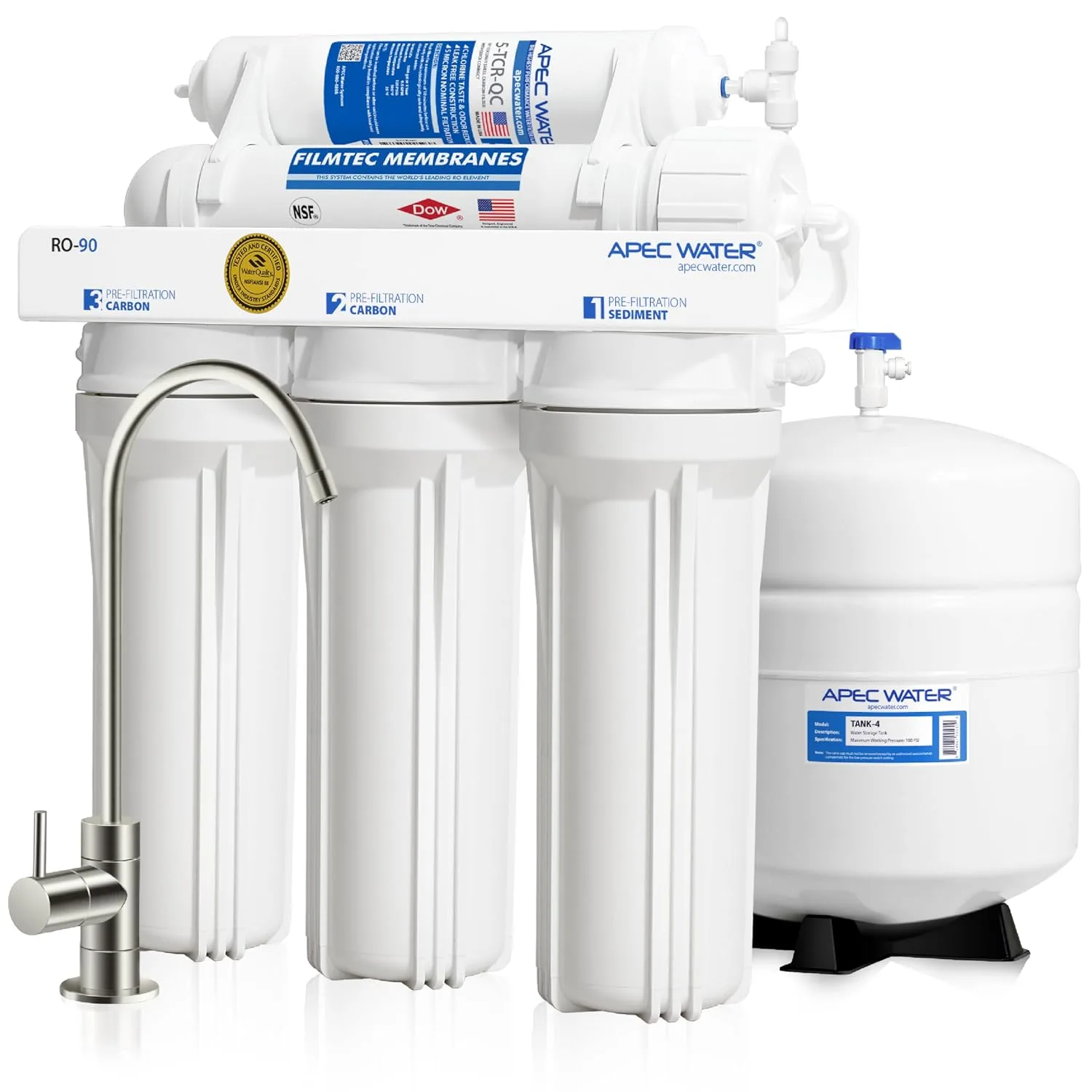
| APEC RO-90 Ultimate 90 GPD RO | $379.99 | 90 GPD | n/a (not on file) | 5-stage | 25 lb | 4.5 |
| Waterdrop G3P600 Tankless RO | $379.99 | 600 GPD | tankless | 8-stage | 31 lb | 4.5 |
| iSpring RCC7AK Alkaline 6-Stage RO | $379.99 | 75 GPD | tank | 6-stage | 27.5 lb | 4.6 |
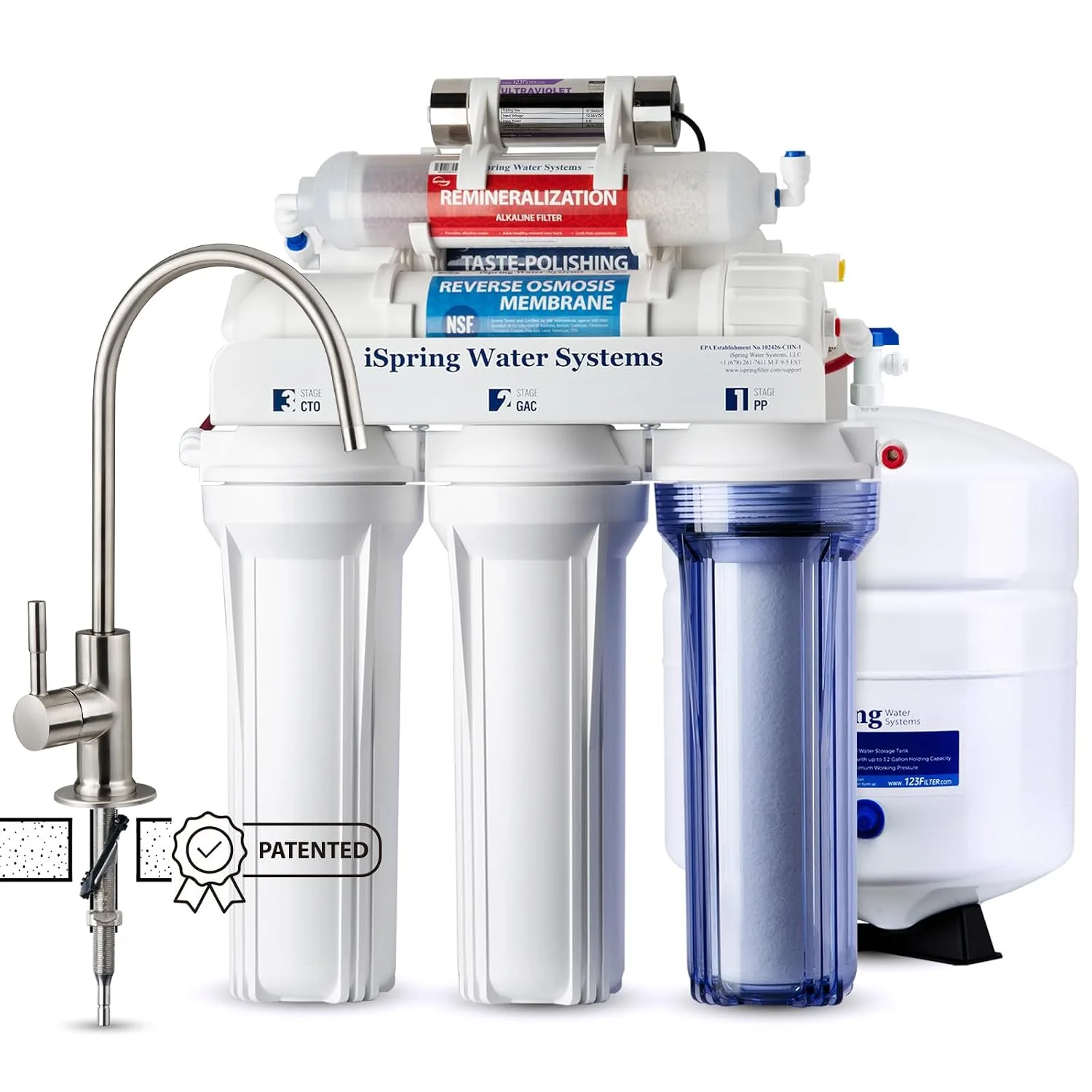
| iSpring RCC7AK-UV | $379.99 | 75 GPD | tank | 7-stage | 28.6 lb | 4.6 |
| iSpring RO500AK Alkaline Reverse Osmosis System | $1129.54 | 500 GPD | tankless | 3-stage | 21 lb | 4.6 |
| Home Master TMHP-L HydroPerfection RO | $899.99 | 75 GPD | tankless | 9-stage | 17.06 lb | 4.8 |
The ranking, #1 to #8
Rank order follows the weights above. Where a system is more expensive but doesn't win on the scored criteria, I say so.
#1 iSpring RCC7 — the default tank system
The RCC7 is the one I'd install in my own kitchen if I wanted a no-drama tank system. 75 GPD, 5-stage, $379.99, 27.5 lb. It doesn't need an outlet, which owners repeatedly count as a plus over pumped high-flow units.
In use, the through-line in owner reports is leak-free operation and responsive US-based support — several people name a specific rep as the reason a hiccup got resolved. One owner upgraded from a two-stage carbon filter that improved taste but left dissolved solids behind and found this closed the gap. Install is described as smooth but a real project, not a ten-minute swap.
Suits: families of three to four on city water who want a tank system and no electrical work. Skip if: you need fast fill for pitchers and cooking at the same time — 75 GPD with a tank is fine for drinking, not for filling a stockpot in seconds.
#2 Waterdrop G3P600 — tankless speed, with caveats
The G3P600 is the tankless pick at $379.99: 600 GPD, 8-stage, 31 lb, and a smart faucet that displays TDS and filter life. It saves real cabinet space compared with a tank unit.
During use, owners describe a dramatic TDS drop — one went from 358 on processed well water to about 1 — and a much smaller footprint. But install is not quick: one owner logged three-plus hours plus flushing, ran a new power line, and fought a leaking T-adapter. Noise is the honest caveat; one reviewer notes it isn't necessarily quiet. The onboard TDS readout also drew a complaint that it's less accurate than a handheld meter, so don't rely on the display alone.
Suits: small kitchens with an outlet under the sink and a household that wants fast fill. Skip if: there's no power under the cabinet, or you're not prepared for an afternoon of plumbing.
#3 iSpring RCC7AK — alkaline without the outlet
The RCC7AK is the RCC7 platform with a sixth remineralization stage, same $379.99, same 75 GPD, 27.5 lb. If straight RO tastes flat to you, this is the version to get.
Owners cite the alkaline stage as the reason the water tastes less flat, and the leak-free and support reports carry over from the RCC7. One buyer switched when store supplies dried up and hasn't looked back. The pre-purchase advice that keeps surfacing is to measure your cabinet — fit is the most common snag.
Suits: households that find plain RO water flat and want minerals back without a separate cartridge. Skip if: you're happy with plain RO taste — the RCC7 saves you nothing in price but one less filter to change.
#4 iSpring RCC7AK-UV — the UV step-up
Same platform again, now 7-stage with a UV lamp, $379.99, 28.6 lb. The UV stage is the reason to step up; day-to-day owner comments still center on taste and reliability rather than the lamp.
The no-outlet advantage holds — this line doesn't need power for the RO side, unlike pumped units. Install is described as smooth with solid components, but owners call it a commitment. Set aside real time and check cabinet dimensions first.
Suits: well-water or cistern households that want an extra barrier and already have the cabinet space. Skip if: you're on treated municipal water and the UV stage is solving a problem you don't have.
#5 APEC RO-90 — more output for difficult water
The RO-90 is the 90 GPD version of APEC's 5-stage tank platform, $379.99, 25 lb. The listing doesn't state tank vs tankless, so the table says n/a — I'm not going to guess.
This model attracts owners with genuinely difficult source water: one New Hampshire household tested positive for arsenic and turned here; another owner in Israel writes about a heavily desalinated national supply. Flow and clean taste are the recurring themes, and one owner came off ZeroWater pitchers that developed a fishy smell within a week or two. The detail-oriented crowd shows up too — one long write-up focuses on the filtered-to-wastewater ratio.
Suits: well-water or high-TDS households that want more daily output than 50 GPD. Skip if: you need documented tank design or a published rejection rate — this listing is thinner on both than the iSprings.
#6 APEC ROES-50 — the budget-friendly 50 GPD
The ROES-50 is the entry point: 50 GPD, 5-stage, tank, 24.9 lb, $379.99. It's a common pick for replacing an aging RO setup — one owner swapped out a roughly 25-year-old system because a full filter-and-membrane change plus a new tank would have cost about the same.
During use, the story is hard, high-TDS tap water coming out tasting clean, and one household with four chronically ill or elderly members treating it as their main drinking supply after tests showed problems with their public water. The counterpoint: one reviewer hit poorly fitting parts that leaked unless fiddled with, so budget time for careful assembly and leak checks.
Suits: one- or two-person households on a budget who want a simple tank system. Skip if: you have a family of four or more — 50 GPD is the lowest capacity here and will feel slow.
#7 Home Master TMHP-L — the premium set-and-forget
The TMHP-L is the expensive one: $899.99, 75 GPD, 9-stage, tankless, 17.06 lb. It's pre-assembled, so install comes down to a few connections, and owners say most of the time goes to removing the old system from a cramped cabinet.
Long-term reports are the reassuring part: owners at the one- and three-year marks describe zero problems, clean-tasting water, and straightforward annual filter changes with support guiding them on which filters to order. Flow rate is noticeably better than what it replaced. One owner repressurized the tank and swapped filters at the one-year point and found it simple.
Suits: buyers who want a pre-assembled, high-stage system and will stay on the annual filter schedule. Skip if: you're price-sensitive — the same $379.99 buys a capable iSpring, and the TMHP-L's advantages are convenience and stage count, not measured rejection.
#8 iSpring RO500AK — high capacity, high price
The RO500AK is the 500 GPD tankless alkaline unit at $1129.54, 3-stage, 21 lb. It's the fastest fill here on paper — the listing says 8 oz in about 10 seconds — and it saves cabinet space.
Owners mention the compact footprint first, then fast-enough fill and great taste. One long-term user ran before-and-after measurements over two years and came away pleased; another in Iowa points to high nitrates as the reason for buying. The honest caveat is noise — one reviewer notes it's louder than expected when it kicks on. No leaks or pressure issues otherwise.
Suits: large households or anyone who wants tankless speed and alkaline remineralization in one unit. Skip if: budget matters — at $1129.54 it's nearly three times the iSpring RCC7AK for the same 75 GPD-class job, and the 3-stage count is lower than cheaper rivals.
Where the money actually goes
The biggest surprise in this list is that six of the eight systems sit at exactly $379.99. At that price, the decision is about design and fit, not budget. The two outliers — the Home Master at $899.99 and the iSpring RO500AK at $1129.54 — buy you pre-assembly, stage count, or tankless speed, not measured rejection rates we can verify.
Filter cost is the number that bites later. Tank systems typically run a full filter set every 6–24 months depending on incoming water; tankless units have their own cartridge schedules. Check replacement prices before you buy, not after.
Who should walk away
If you rent and can't drill a faucet hole, skip under-sink RO entirely. If you have no outlet under the sink, skip every tankless unit here — the G3P600, RO500AK, and TMHP-L all need power. If you're on very hard water, budget for a softener or more frequent filter changes; RO membranes don't like scale.
And if you need a documented rejection percentage for a specific contaminant, don't buy from a listing alone. Ask the manufacturer for the NSF report or a lab sheet. None of these listings gave me a number I'd stake a health decision on.
FAQ
Do I need a plumber? Not necessarily — all eight are DIY-friendly on paper, but the tankless units need an outlet and a drain connection, and the Waterdrop owner who ran a new power line is a fair warning.
Tank or tankless? Tank if you want no electrical work and a lower install fuss; tankless if cabinet space is tight or you want fast fill and have power under the sink.
How often do filters change? Varies by system and water quality — the iSprings publish 6-month to multi-year schedules depending on the filter, and APEC recommends 6–24 months based on incoming water.
Will RO remove minerals? Yes, and that's why alkaline stages exist. If you want minerals back, the RCC7AK, RCC7AK-UV, RO500AK, and TMHP-L all add a remineralization stage.
What owners actually said
Themes below are paraphrased from owner reviews, not raw quotes. Star averages are listing aggregates, not proof.
- iSpring RCC7: leak-free installs and named support reps come up repeatedly; measure your cabinet first.
- Waterdrop G3P600: dramatic TDS drops and a small footprint, but installs run long and the unit isn't silent.
- iSpring RCC7AK: the alkaline stage is the reason people pick it; same leak-free and support reports as the RCC7.
- APEC RO-90: attracts well-water and high-TDS owners; one long review focuses on the wastewater ratio.
- APEC ROES-50: hard-water households report clean taste; one owner hit leaking fittings and recommends careful assembly.
- Home Master TMHP-L: one- and three-year owners report zero problems and simple annual filter changes.
- iSpring RO500AK: compact and fast enough, but one owner flags noise louder than expected.
- iSpring RCC7AK-UV: UV is the step-up reason; day-to-day comments still center on taste and reliability.